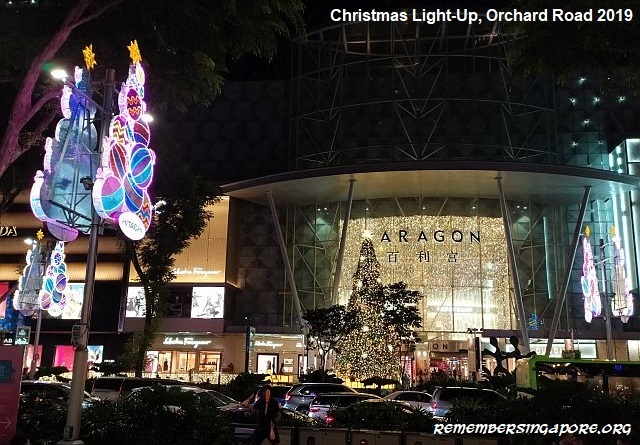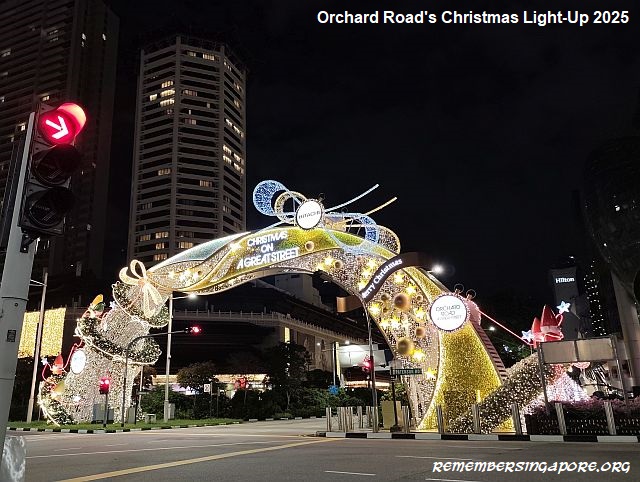
The Christmas Light-Up at Orchard Road, Since 1984

By the 1930s, the Singapore Cold Storage and retail establishments at Orchard Road were already popular among the British and other Europeans for their Christmas shopping. After the war, Orchard Road’s Young Men’s Christian Association (YMCA) continued to hold Christmas carols and concerts.

The Orchard Road of the sixties and seventies were decorated with bright lights during the year-end festive period. Over the years, it had become a tradition for the shopping malls and hotels at Orchard Road to put up decorations and lights to attract shoppers and tourists. But it was not until 1984 that the Singapore Tourist Promotion Board (STPB) made the light-up at Orchard Road an annual event.

The first official light-up ceremony at Orchard Road was held on 13 December 1984, officiated by Dr Wong Kwei Cheong, then-Minister of State for Trade and Industry. It was relatively a mild light-up compared to today – only 2,000 bulbs across Orchard Road and Scotts Road were installed and lit up.

The STPB, together with the Singapore Retail Merchants’ Association, National Association of Travel Agents and Singapore Hotel Association, also organised the “Battle of Lights” contest among the shopping malls, department stores and hotels.

Many shopping malls and hotels actively participated in the contest. Tangs increased its Christmas budget by $25,000 to install more than 37,000 little bulbs on a 4.6m-tall Christmas tree in front of its shopping plaza.

Others such as Galeries Lafayette, The Hilton and Crown Prince Hotel also allocated tens of thousands of dollars in their respective decorations. Displays of Santa Claus, reindeers, singing angels, biblical shepherds and gift boxes lined up outside the various malls and hotels.

STPB and the Photographic Society of Singapore also collaborated to organise the “Christmas Illumination Contest”, where locals and tourists could submit their best photographs of the Christmas decorations at Orchard Road and other prime shopping areas. The prizes were $1,000, $750 and $500 for the first, second and third winners respectively.
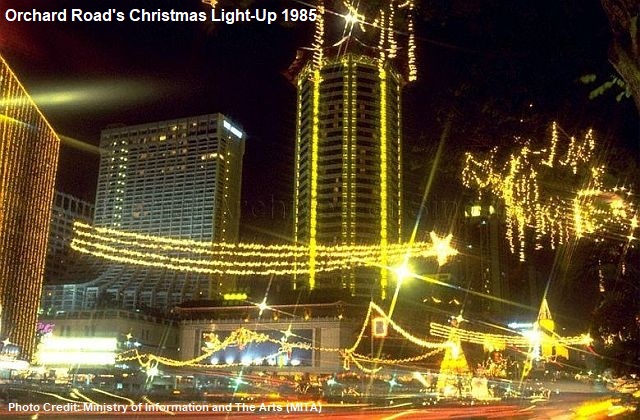
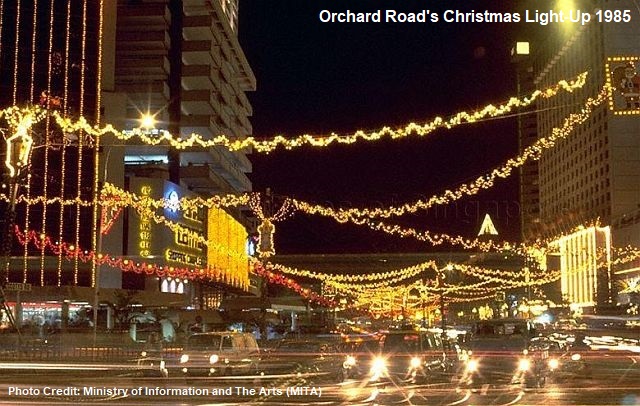
The first Orchard Road’s Christmas light-up was a success, attracting an estimated 2.99 million visitors. In the following year, Singapore, however, experienced its first post-independence recession. This instead gave STPB a good reason to continue its organisation of the second Christmas light-up at Orchard Road, hoping that the festive event would provide optimism and offer more opportunities for the local retailers to recover from the gloomy economic situations.

STPB’s 1985 theme was “Christmas at the Equator”. Comets and shooting stars, in line with the year of Halley’s Comet, were included in the Christmas light-up designs that consist of more than 400,000 light bulbs and 130 lamppost graphics. The decorations and lights were put up for almost seven weeks from 7 December 1985 to 20 January 1986.

A little trivia occurred during the 1986 Christmas light-up at Orchard Road. The winners of the Fonda power boat grand prix and Miss Tourism were arranged to officiate the light-up ceremony with E.W. Barker (1920-2001), then-Minister for Law. However, a power boat accident and heavy downpour led to an almost two-hour delay, in which Minister Barker proceeded by himself to turn on the lights.

1988’s theme was “Christmas Sharityland”, where Sharity the Elephant was used in the displays along with Santa Claus and other Christmas figures. Then-Singapore President Wee Kim Wee (1915-2005) and the First Lady were invited to officiate the opening ceremony. It was the first time that the light-up was used to raise funds for the needy in Singapore. The Christmas light-up was also extended from Orchard Road to Marina Square.

The Christmas Sharity light-up continued into the nineties, although there were some public feedback that the novelty had somehow faded. The road closures and some large Christmas decorations blocking the view of the Area Licensing Scheme gantry also irked the wrath of many drivers.

By 1992, the annual Christmas light-up was not restricted to the Orchard area. This year, the STPB had also organised light-ups at other areas around Havelock Road, North Bridge Road and Beach Road.
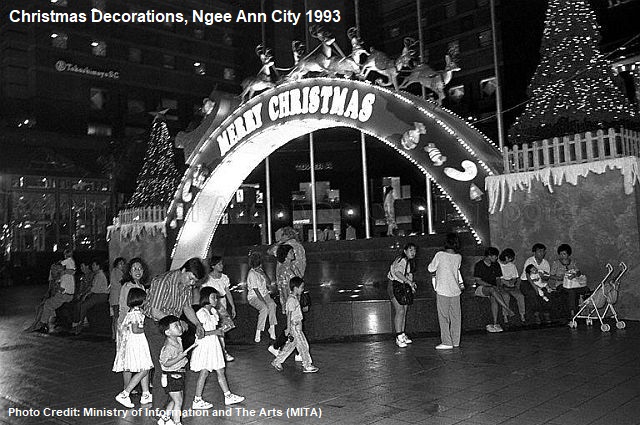
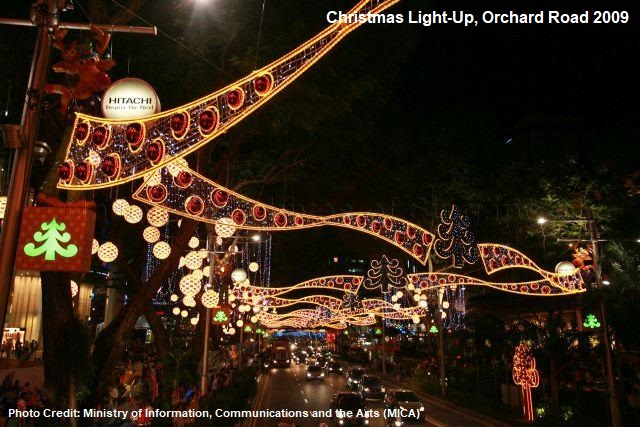
Since 1984, the Orchard Road’s Christmas light-up has been held for more than four decades, surviving the Asian financial crisis (1997), SARS outbreak (2003), Great Recession (2008/09) and COVID-19 pandemic (2020). Rain or shine, good or bad economy, hopefully this annual festive event can bring cheers, joy and celebrations to the Singaporeans for many more years to come.
Published: 24 December 2025
Posted in Cultural | Tagged , , , , , , , , , , , | 1 Comment

Nostalgic Coloured Photos of Singapore’s Roadside Durian Stalls

Although Singapore does not have an official national fruit, durian is arguably the favourite fruit among Singaporeans. Durian as a national fruit occasionally becomes a hot topic of debate between Singapore and Malaysia, or between Malaysia and Indonesia.

There was an old saying that durians have “the flavour of heaven, and the smell of hell”. According to Hikayat Abdullah, Sir Stamford Raffles (1781-1826) was not a fan of the fruit. It was said that a man came to Raffles’ office and wanted to sell six durians to him. But as soon as he caught the smell of the durians, Raffles held his nose and ran upstairs. He later complained that that the durian smell made him nauseous and gave him a headache.

But another Englishman Alfred Russel Wallace (1823-1913), who had Wallace Way (off Lornie Road) named after him, absolutely loved durians. A naturalist and biologist, he described the flavour of durians as indescribable, with “rich, butter-like custard and glutinous smoothness to the pulp”.

The scientific name of durian is durio zibethinus, where durio refers to thorns (derived from Malay word duri) and zibethinus refers to its strong pungent smell (derived from Italian word zibetto or civet cat. Civet cats produce a strong urinous, musky odour). Singapore has its own wild species of durian named durio singaporensis (Singapore Durian) that are found only in the forested areas at Nee Soon, MacRitchie and Upper Seletar.

Cultivated durian plantations and estates, on the other hand, were once abundant in Singapore, where tens of thousands of privately-owned durian trees were grown and harvested at the Mandai, Bukit Timah, Upper Serangoon areas as well as Pulau Tekong and Pulau Ubin.

Lorong Lew Lian (originally a dirt track called Kampong Lew Lian and renamed in 1957; lew lian means “durian” in Hokkien) and Jalan Durian (at Pulau Ubin) are some of the roads in Singapore named after the thorny fruit. Lew Lian Vale is a short minor road off Lorong Lew Lian.

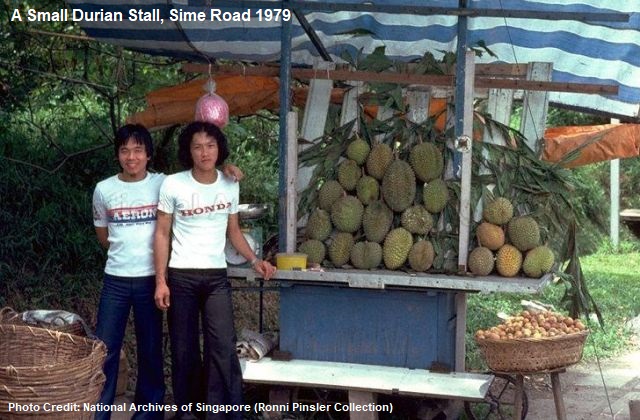
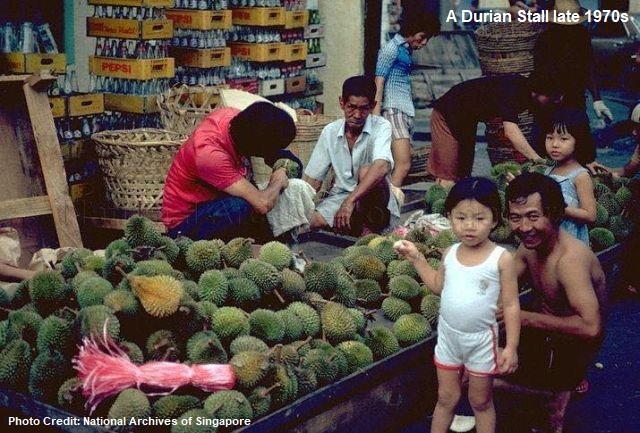
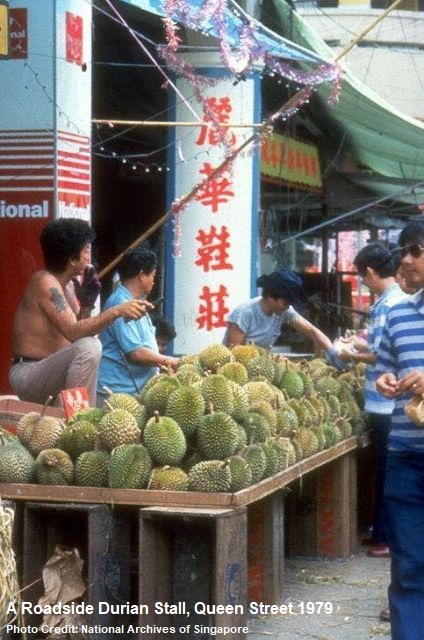
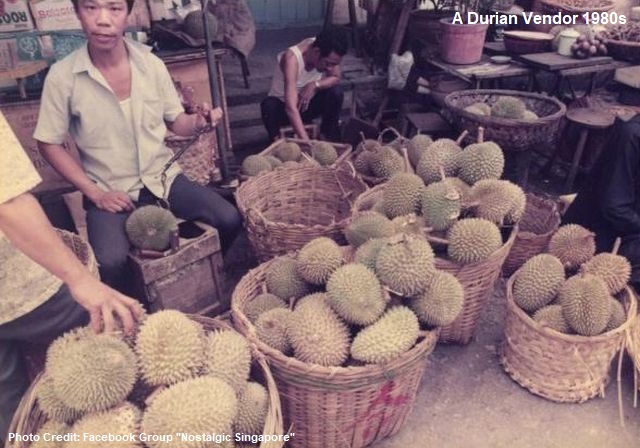
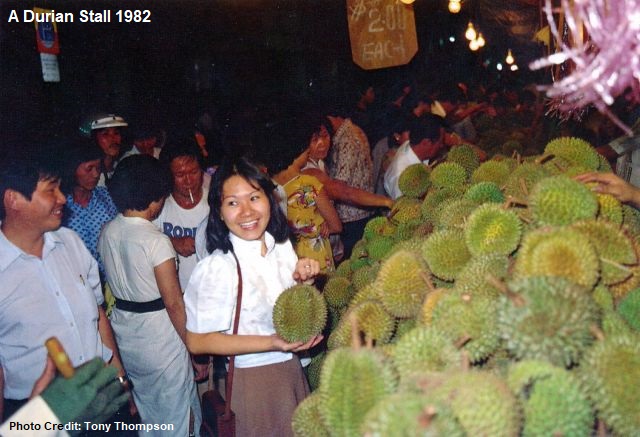
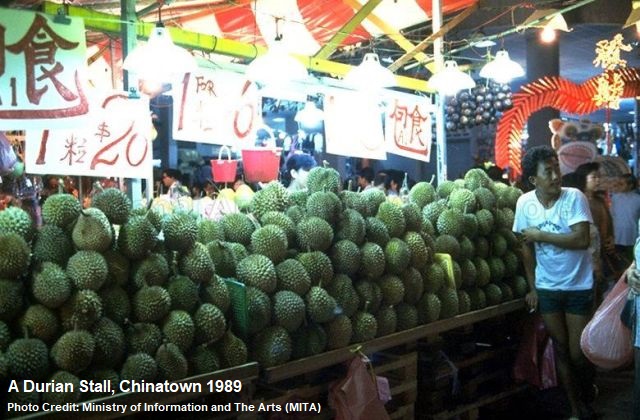
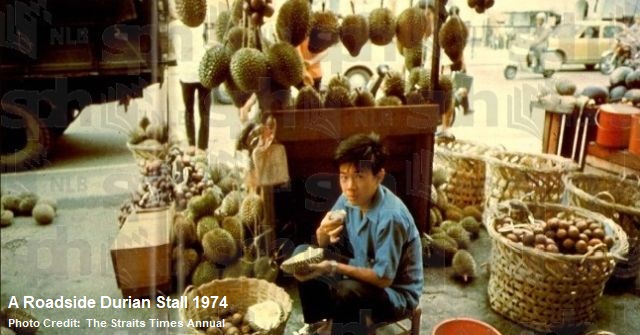
Durians were extremely popular that in the sixties and seventies, roadside durian stalls and their customers often clogged up the streets and obstructed the traffic. Another issue was the huge amount of durian shells disposed. The refuse disposal problem worsened especially during the durian seasons of June/July and November/December.

In the early seventies, the average refuse in Singapore was between 1,300 and 1,400 tons a day. During the durian seasons, the figures shot up by another 200 tons. To tackle the issue, Lim Kim San (1916-2006), then-Minister for the Environment, proposed a $1 tax levy for every durian imported into Singapore. Much to the relief of the local durian lovers, the proposal did not materialise.

In the seventies, the best places in Singapore to get the durian fix were Geylang, Rochor and Chinatown. While most durian hawkers were fair in doing their businesses, there were some black sheep that spoiled the reputation of the durian trade.

In 1975, the Weights and Measures Unit of the Trade Department cracked down on 25 durian hawkers for using rigged weighing instruments to cheat customers. These hawkers made an additional 40 to 50% earnings from every basket of durians sold, where they weighed using the Chinese measurement unit of kati (about 600 grams).

Under the law, any person who is found using unjust weighing machines is liable, on conviction, to a fine of $500 on first offence, or $1,000 for subsequent offence. Besides the dishonest hawkers, there were also many reports and complaints of thuggish durian hawkers and their aggressive hard selling tactics or even threats to customers.

Singapore’s imports of durians reached $10 million in 1983, with as much as 13,400 tons of durians shipped into Singapore. In the mid-eighties, good quality durians from Malaysia weighing between 2kg and 3kg were sold at $6 to $8 per kg.

In 1990, a premium type of durians from Malaysia was marketed as XO or Tiger Hill, costing $8 per kg (an average size durian weighs between 1.5 and 2kg). A king XO durian could even fetch $25 per kg.

Since then, over the years, different durian varieties such as D10, D24, Musang King, Red Prawn, Golden Phoenix, Black Thorns and Old Tree have made their way into the Singapore market, commanding different qualities and prices to the local durian lovers.

Gourmet King, Singapore’s first durian restaurant, was opened in 1983. Located at Hougang Street 21, the air-conditioned restaurant offered various types of durians for the customers to taste.

The nineties also saw the rise of many durian-themed dessert and pastry shops, whose innovations included durian cakes, ice kacangs, tarts, puffs, cream rolls and other desserts. There was even a durian cafe, Singapore’s first, set up at China Square Food Centre in 1999.

Even though it’s Singapore’s favourite fruit, durians, due to their strong lingering smell, are banned by the Singapore Mass Rapid Transit (SMRT). In May 1988, the MRT Corporation outlawed the fruit from its trains; passengers are only allowed to bring durians into the trains if they are properly vacuum sealed. Under MRT Regulation No 7, offenders would be fined $500.

Published: 10 December 2025
Posted in Nostalgic | Tagged , , , , , , , , , , , , , , , , , , , , , , , , , | Leave a comment

When Soviet-Made Cars Roamed Singapore Roads

From the seventies to nineties, cars that roamed Singapore roads were largely imported from countries such as Australia (Holden), Czechoslovakia (Skoda), France (Citroen, Peugeot, Renault), Germany (Mercedes-Benz, BMW, Audi, Opel, Volkswagen), Italy (Fiat, Alfa Romeo, Lancia, Maserati), Malaysia (Proton), Romania (Aro, Dacia), South Korea (Hyundai), Spain (Seat), Sweden (Volvo, Saab) and USA (Ford).

Japanese cars were the most popular among the local drivers, with the Toyota, Honda, Nissan, Mazda, Suzuki, Subaru, Isuzu, Daihatsu and Mitsubishi cars a common sight on Singapore roads.

Soviet-Made Cars

Soviet-made cars were almost unheard of in Singapore until the late seventies, when the Soviet Union’s trade with the ASEAN countries (Singapore, Malaysia, Thailand, Indonesia and Philippines) rose tremendously. Almost $938 million of trade were recorded in the first nine months of 1977, a 47% jump compared to the previous year.

Cars soon became one of the Soviet Union’s exports to Singapore. Contacts were established between Avtoexport, the former Soviet Union organisation responsible for exporting Soviet vehicles, and local agents such as Lada Motors Pte Ltd and Eurocars Pte Ltd. In 1977, Lada and Volga cars landed on Singapore Roads, with the latter being converted and used as the yellow-top taxis.

Volga Taxis

The Volga taxis were dubbed as rugged, economical and comfortable mode of transport that were fully air-conditioned and had computerised fare meters. Costing about $17,500, it was cheaper by a range of $1,500 to $6,500 as compared to other cars of similar engine size. Local taxi driver Ng Chin Hock became the first owner of a Volga taxi in Singapore in 1977.

Lada 1200

The first Lada cars, known as Lada 1200 of model VAZ 2101, also arrived at Singapore in 1977. With its appearance highly resembling Fiat 124Sn, the Lada 1200 was the Russian version of the 124Sn. After the Soviet Union bought the Fiat manufacturing plant in the sixties, the Fiat 124Sn model was discontinued.

Soviet Union then built a new manufacturing plant at Togliatti (formerly known as Stavropol) in 1967 at a cost of £400 million (or $1.7 billion in Singapore dollars at that time). Complete with computerised equipment, the manufacturing plant, known as Volzhsky Plant, was able to produce 660,000 cars a year. The VAZ model was referenced to the plant, standing for Volzhsky avtomobilny zavod (or Volga Automotive Plant in English).

Lada 1200 was mechanically different from Fiat 124Sn. It was fitted with a Soviet-made 1,198cc single overhead camshaft engine producing 60 horsepower, and had improvements such as a hydraulically assisted clutch pedal, dual circuit hydraulic brakes and enhanced transmission. The car was retailed in Singapore for $12,400 without PARF (Preferential Additional Registration Fee) and $15,900 with PARF.

Due to poor sales, Lada Motors Pte Ltd gave up its distribution rights of Lada cars in 1981. It was not until the late eighties when Lada cars attempted to penetrate the Singapore market again.

Lada Samara

In 1989, Intraco Ltd, the listed government-linked trading company, ventured into the local automotive industry by setting up Samara Motors to collaborate with Togliatti Cars (Asia) Pte Ltd to distribute Lada cars in Singapore. The models they brought in included the 1,300cc Lada Samara and 1,600cc Lada Niva. They were retailed at a range of $30,000 to $40,000 with PARF. Other cars of similar price range were Skoda Rapid ($29,990), Subaru Viki ($31,000) and Proton Saga ($39,900).

The eighties and nineties saw leaps and bounds in the designs and performances of many car brands and models. The Lada cars, however, were getting outdated in their designs and a lack of power steering. They were also plagued by quality and reliability issues such as jammed doors and overheating engines.

There were even car jokes about Lada in the nineties. For examples:

  • How do you double a Lada’s value? – fill up its tank
  • What do you call a Lada with twin exhausts? – A wheelbarrow

When the Soviet Union disintegrated in December 1991, the Volzhsky Plant struggled for survival. In the mid-nineties, Russian criminal organisations moved in to control the plant’s car sales, spare parts and workers, badly affecting its reputation and quality assurance. Today, the manufacturing plant is part of Russia’s state-owned enterprises. It continues to produce Lada cars, but Russian cars are no longer found on the Singapore roads.

Trivia – Rarest Car Brands in Singapore

According to the Land Transport Authority’s (LTA) Annual Vehicle Statistics 2024, as of today, the rarest registered car brands in Singapore are:

  • Alvis (Britain)
  • Armstrong Siddeley (Britain)
  • Austin (Britain)
  • BSA (Britain)
  • Bertone (Italy)
  • Binz (Germany)
  • Buick (USA)
  • Caterham (Britain)
  • Chalmers (USA)
  • DeLorean (USA)
  • Dodge (USA)
  • Essex (USA)
  • Frazer (USA)
  • Geely (China)
  • Hafei (China)
  • Hillman (Britain)
  • Holden (Australia)
  • International (USA)
  • Jensen (Britain)
  • Koenigsegg (Sweden)
  • Lagonda (Britain)
  • Lea-Francis (Britain)
  • Leyland (Britain)
  • Lincoln (USA)
  • Marcos (Britain)
  • Maxwell (USA)
  • Maybach (Germany)
  • Mercury (USA)
  • Neta (China)
  • Noble (Britain)
  • Pagani (Italy)
  • Panther (Britain)
  • Pontiac (USA)
  • Rambler (USA)
  • Riley (Britain)
  • Ruf (Germany)
  • Rugby (USA)
  • Standard (Britain)
  • Stutz (USA)
  • Talbot (Britain/France)
  • Valiant (Australia)
  • Velorex (Czechoslovakia)
  • Wolseley (Britain)
  • Wuling (China)
  • Zotye (China)

There are currently not more than five cars in Singapore for each of these car brands. The majority of them are vintage cars of several decades old. The rest are luxurious supercars or new imports from China.

Published: 30 October 2025

Posted in Exotic | Tagged , , , , , , , , | 3 Comments

The Past, Present and Future of Standalone Public Libraries in Singapore

Between 1960 and 1980, Singapore built many standalone public libraries to encourage the reading and learning of the people and improve the information literacy among Singaporeans.

Originally known as the branch libraries of the National Library, they were renamed community libraries in 1995 when the National Library Board (NLB) was officially established as a statutory board on 1 September that year.

By the mid-nineties, there were 10 public libraries in Singapore with an annual visitorship of 5.5 million. The number has since grown to 28 today, with more than 38.8 million materials borrowed by the libraries’ visitors each year.

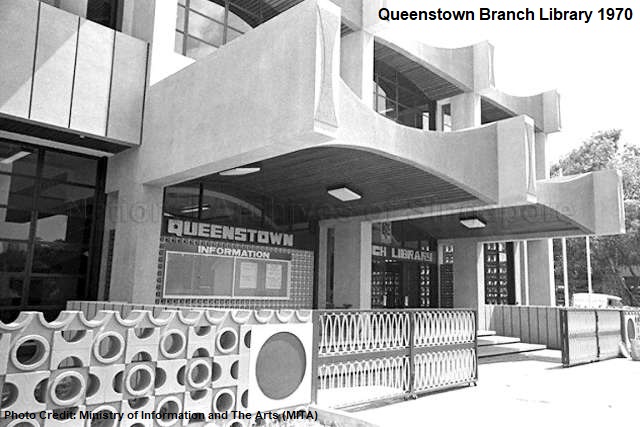
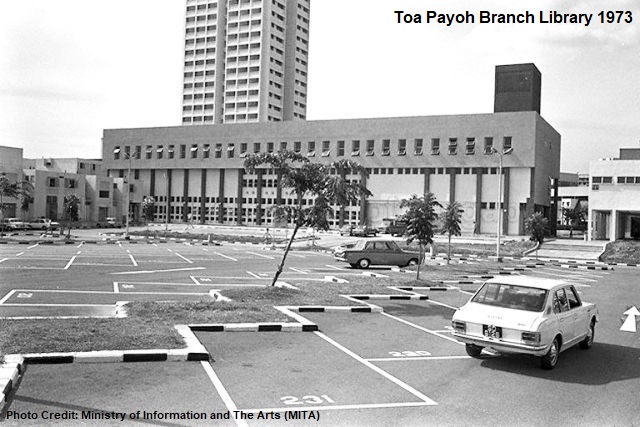
Interiorly designed with adult’s, children’s and reference libraries, the standalone public libraries aimed to serve populations of 250,000 or more, and were therefore built at convenient locations that not only supported its own new towns but also the nearby housing estates.

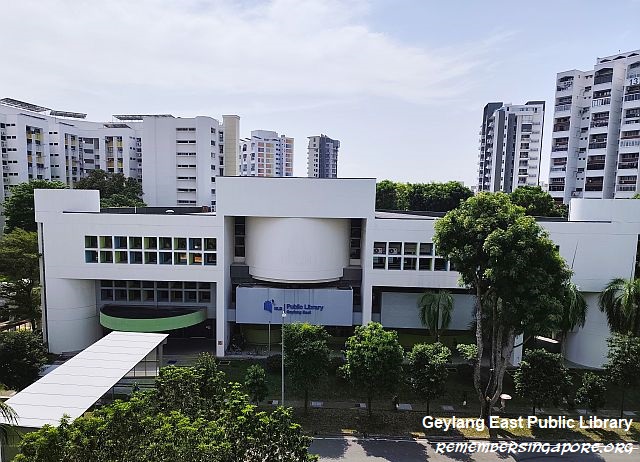
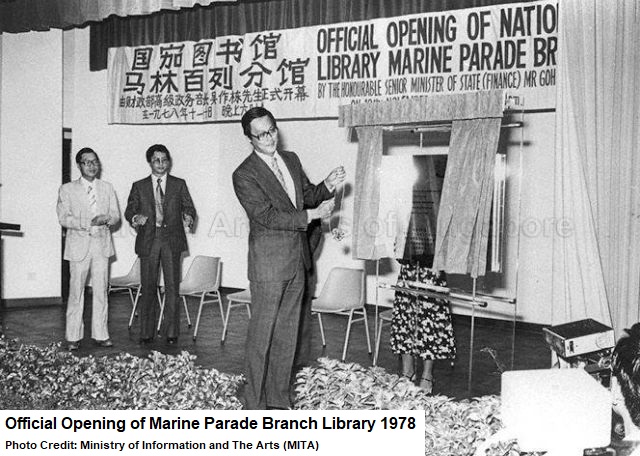
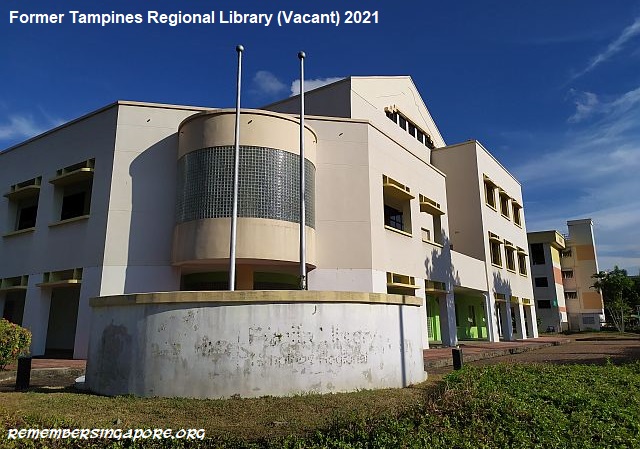
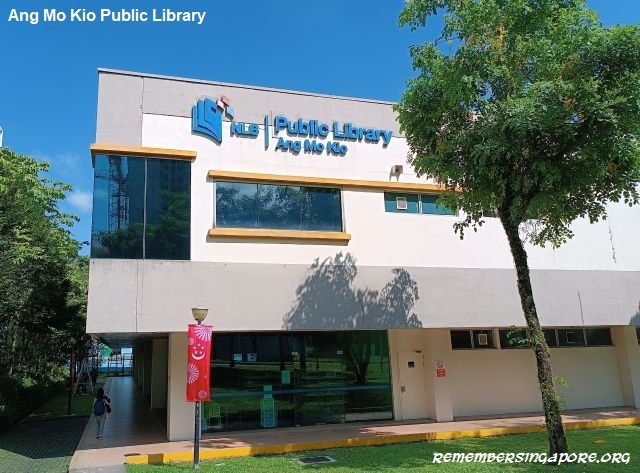
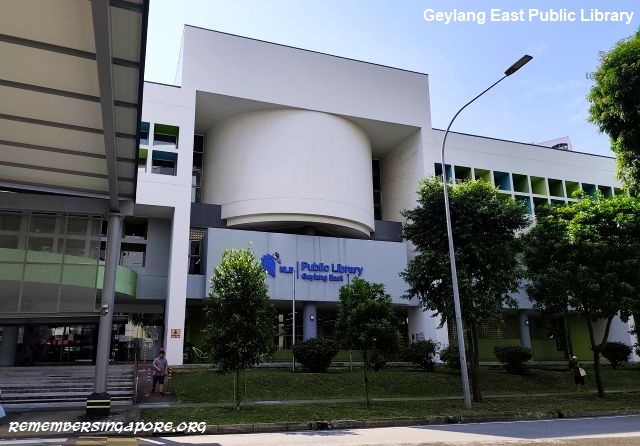
Over the years, many of these standalone public libraries have become iconic landmarks of their own. However, the Central Public Library, Marine Parade Public Library, Bukit Merah Public Library, Bedok Public Library and Tampines Regional Library had either ceased to exist or were relocated to malls or integrated complexes. As of 2025, there are six standalone public libraries left in Singapore.

Below is the list of former and current standalone public libraries in Singapore.

Library Name

Opening Date

Status (as of September 2025)

1

Central Community Library (Central Public Library)

12 November 1960

Closed on 1 April 2004 when the old National Library Building was scheduled for demolition. Reopened in 2005 at the new National Library at Victoria Street

2

Queenstown Community Library (Queenstown Public Library)

30 April 1970

Conserved under Urban Redevelopment Authority’s (URA) Master Plan 2014

3

Toa Payoh Community Library (Toa Payoh Public Library)

7 February 1974

Expected to be part of a new integrated development by 2030

4

Marine Parade Community Library (Marine Parade Public Library)

10 November 1978

Moved to Marine Parade Community Complex and reopened on 28 May 2000

5

Bukit Merah Community Library (Bukit Merah Public Library)

28 December 1982

Closed on 1 December 2018 and replaced by library@harbourfront at VivoCity

6

Ang Mo Kio Community Library (Ang Mo Kio Public Library)

17 August 1985

Scheduled to be closed in 2026 and demolished; new Ang Mo Kio Library expected to be opened at AMK Hub

7

Bedok Community Library (Bedok Public Library)

28 September 1985

Closed on 20 August 2017 and relocated to Heartbeat@Bedok, a community centre and integrated lifestyle hub

8

Geylang East Community Library (Geylang East Public Library)

26 July 1988

Expected to be relocated to Tanjong Katong Complex by 2030

9

Jurong East Community Library (Jurong Regional Library)

1 August 1988

Expected to be relocated to Jurong East Integrated Transport Hub by 2028

10

Tampines Regional Library

3 December 1994

Closed on 4 June 2017 and relocated to Our Tampines Hub on 5 August 2017. Its former building was redeveloped into a MINDEF office since 2023

11

Bishan Public Library

1 September 2006

Located next to Junction 8. No relocation plan yet

In 1996, the government committed a $1-billion fund to support NLB to develop a network of shopping mall libraries to “bring the libraries to the people”. New features were also introduced, such as the bookdrop service in 1996 and the self-service book borrowing machines in 1998.

Jurong West Community Library became the first public library to be housed in a shopping mall. Opened in 1996, it was located at Jurong Point. In 2006, the library was relocated to The Frontier Community Place, a three-storey integrated community hub at Jurong West Central.

In 1997, the NLB budgeted $15.6 million in a five-year project to upgrade seven public libraries, including the National Library and six community libraries at Toa Payoh, Ang Mo Kio, Geylang East, Bedok and Bukit Merah. The seventh one Jurong East Community Library was refurbished into Jurong Regional Library in 2004. With a floor area of 12,020m², it briefly became the largest library in Singapore.

This record was broken a year later when the new National Library building was opened at Victoria Street on 12 November 2005. With a pair of 16-storey blocks occupying a massive total gross floor area of 58,800m², National Library is the largest and tallest library in Singapore. For the branch libraries, Punggol Regional Library is the largest with a floor area of 12,180m².

By the mid-2000s, the number of public libraries in Singapore had more than doubled to 22. Annual visitorship had increased tremendously to 31 million. The names of the libraries were also changed from Community Libraries to Public Libraries in 2008.

As of 2025, 14 out of the 28 public libraries are situated in shopping malls, while eight are co-housed in community centres or other types of complexes.

Library Name

Opening Date

Location

1

Jurong West Community Library (Jurong West Public Library)

22 March 1996

Originally located at Jurong Point. Relocated to The Frontier Community Place in 2006

2

Choa Chu Kang Community Library (Choa Chu Kang Public Library)

22 February 1997

Located at Lot One Shopper’s Mall

3

Cheng San Community Library (Cheng San Public Library)

6 March 1997

Located at Hougang Mall

4

Yishun Community Library (Yishun Public Library)

26 February 1998

Originally located at Sembawang Town Council. Relocated to Northpoint City in 2008

5

Bukit Panjang Community Library (Bukit Panjang Public Library)

4 April 1998

Located at Bukit Panjang Plaza

6

Bukit Batok Community Library (Bukit Batok Public Library)

21 November 1998

Located at West Mall

7

library@orchard

21 October 1999

Originally Located at Ngee Ann City. Relocated to Orchard Gateway and reopened on 23 October 2014

8

Sembawang Community Library (Sembawang Public Library)

11 August 2000

Located at Sun Plaza

9

Pasir Ris Community Library (Pasir Ris Public Library)

6 October 2000

Located at White Sands

10

Woodlands Regional Library

28 April 2001

Located at Woodlands Civic Centre

11

Library@esplanade

12 September 2002

Located at Esplanade – Theatres on the Bay

12

Sengkang Community Library (Sengkang Public Library)

30 November 2002

Located at Compass Point

13

Serangoon Public Library

11 March 2011

Located at Nex

14

Clementi Public Library

23 April 2011

Located at The Clementi Mall

15

library@chinatown

31 January 2013

Located at Chinatown Point

16

library@harbourfront

12 January 2019

Located at VivoCity

17

Punggol Regional Library

6 April 2023

Located at One Punggol

Other that the public libraries, the NLB is also in-charge of the National Archives of Singapore, Singapore Botanic Gardens’ Library, Lee Kong Chian Reference Library and Central Arts Library (both are parts of the National Library). There was also the Lifelong Learning Institute’s (LLI) LLiBrary, a collaboration between NLB and Workforce Development Agency (WDA), but it was closed on 1 March 2025.

By 2030, the conserved Queenstown Public Library and Bishan Public Library will likely be the only remaining standalone public libraries in Singapore.

Published: 29 September 2025
Posted in Nostalgic | Tagged , , , , , , , | Leave a comment

Those Years When We Brushed Our Teeth Together

Dental education and oral hygiene for the young in Singapore have come a long way. In 1969, the Ministry of Health (MOH) launched dental education for all the primary schools in Singapore, with the aim to raise dental health standard and instil good oral hygiene practises among the students.

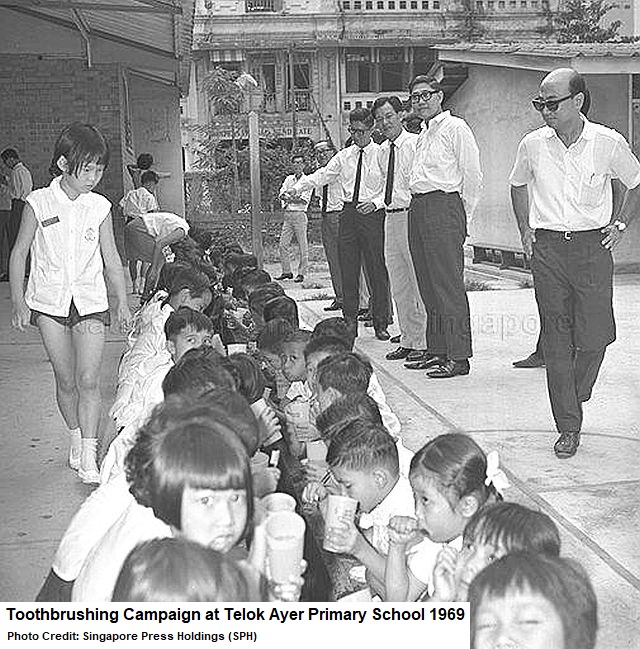
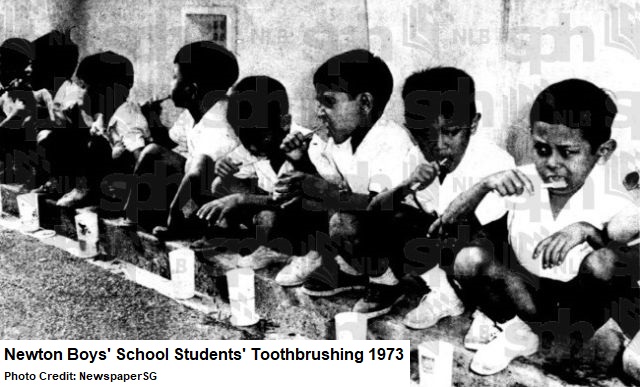
Many Singaporeans would fondly remember their school days during the seventies and eighties where they did their compulsory toothbrushing along the school drains during the recesses.

Good sound teeth are essential to good health” was a slogan by then-Health Minister Chan Sian Chin (1933-2014) for his ministry’s push for the nationwide campaign. This was after the government released a dental health report that showed one out of two Singaporeans did not brush his teeth regularly, and about half of the student population had no toothbrushes, and even if they had, they either did not brush their teeth, or did it wrongly. The report was supported by the evidence from the poor state of the teeth of National Servicemen examined during their enlistment in service.

The dental health campaign began on 4 February 1969 when the largest primary school – Telok Ayer Primary School – had its students from 12 classes lined up along the school drains and squatted side by side with each other. For a subsidised 25 cents per set, the students had their toothbrushes and plastic water mugs ready, inscribed with “use me after food” and “clean teeth never decay” respectively, before being taught how to properly brush their teeth.

In addition, MOH also expanded the schools’ dental service. By 1971, there were 64 school dental clinics and two dental centres that provided half of the 350,000-strong primary school population with full dental treatment and regular attention. The rest of the primary school students, and 150,000 secondary school students, were provided with dental treatment only on demand.

Besides the campaign, it was also found that the fluoridation of Singapore’s water supply, since 1958, had helped reduce the incidence of tooth decay in children of age between seven to nine by 40% over a ten-year period. However, the fluoridation was never a fully effective solution against tooth decay.

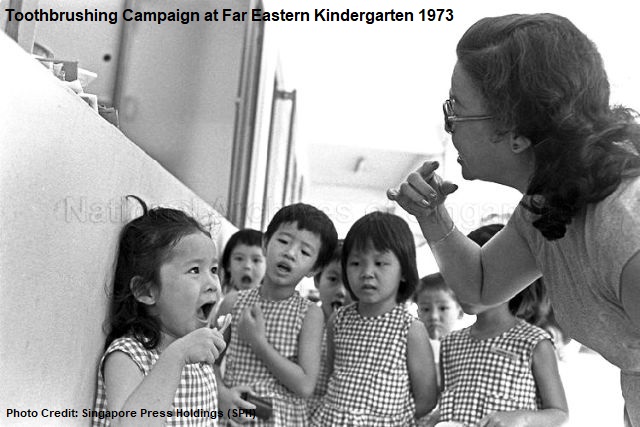
By 1973, the toothbrushing campaign was extended to the kindergartens, where their teachers were trained in the proper techniques of toothbrushing and basic dental hygiene at the Dental Health Education Unit.

There were some difficulties though, as the MOH found that some principals and teachers lacked the enthusiasm to foster dental health education to their students. Hence, the Dental Health Education Unit staff were tasked to pay regular visits to the schools to help and supervise the teachers.

Additional lessons, competitions, exhibitions and other activities were also introduced to improve dental health awareness among the teachers and students. The annual Dental Health Week was launched by the Dental Health Education Unit in May 1970, where they distributed free dental health kits to all the primary school students. Each kit comprised a small toothbrush, a tube of toothpaste and a “Your Aid to Clean Teeth” pamphlet.

By the mid-seventies, the MOH were looking to increase the number of school dental clinics to 150. The ministry also instructed the primary schools to issue to their students free dental kits made up of four toothbrushes and a mug per set.

Today, free basic dental care is provided via the Health Promotion Board’s (HPB) Student Dental Centre to all students in Singapore aged seven to 18 at school-based clinics.

Published: 31 August 2025

Posted in Nostalgic | Tagged , , , , , , , , , | Leave a comment

Singapore’s Most Recognisable Logos, Then and Now (Part 1)

A logo is more than a graphic design. It is a visual representation of a brand, business or product. For organisations and companies, it is a corporate symbol that reflects their image, efficiency and reliability. A well-designed logo can be iconic and remain recognisable for years or even decades.

Below are some of the most recognisable logos in Singapore.

Housing and Development Board (HDB)

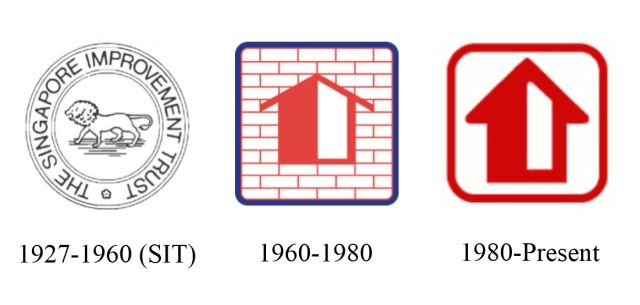
The Housing and Development Board (HDB) was established on 1 February 1960 as Singapore’s public housing authority, taking over the role from the Singapore Improvement Trust (SIT).

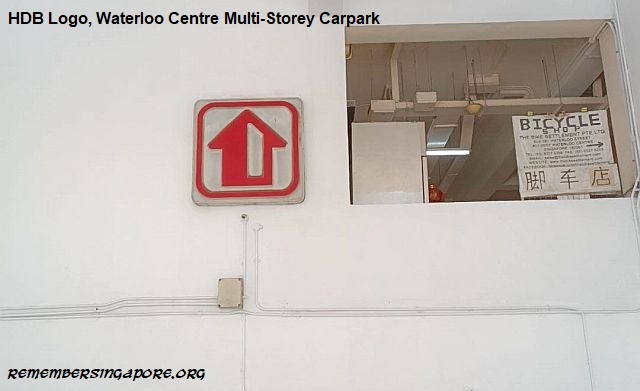
The first HDB logo comprised a house symbol in a blue square frame with red brick-wall background. The colours of red, blue and white were HDB’s corporate colours, and the bold, angular lines matched the design styles of the sixties and seventies. The HDB logo represented the statutory board’s mission to provide basic homes for Singaporeans.

In March 1980, HDB changed its logo to a new one, where the design emphasised on the simplicity of form. The new HDB logo looks similar to the old one, retaining the identity through the home symbol and the square frame that represents the housing environment. HDB also continued the use of the dominant red colour for its new logo.

Public Utilities Board (PUB)

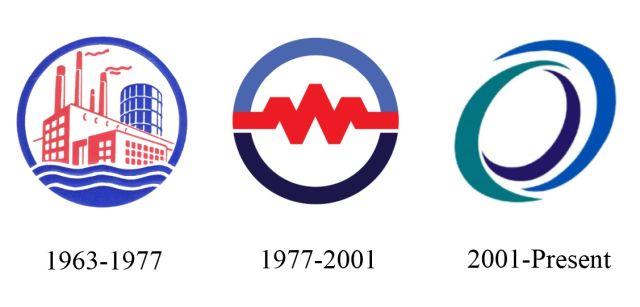
The Public Utilities Board (PUB) was established in 1963 as a statutory board to coordinate and manage the supply of electricity, water and piped gas for Singapore. Its first logo was made up of a circle containing a cluster of buildings and chimneys emanating smoke. In 1977, PUB housed all its departments from City Hall into its new PUB building at Somerset Road and, in the same year, introduced a new logo.

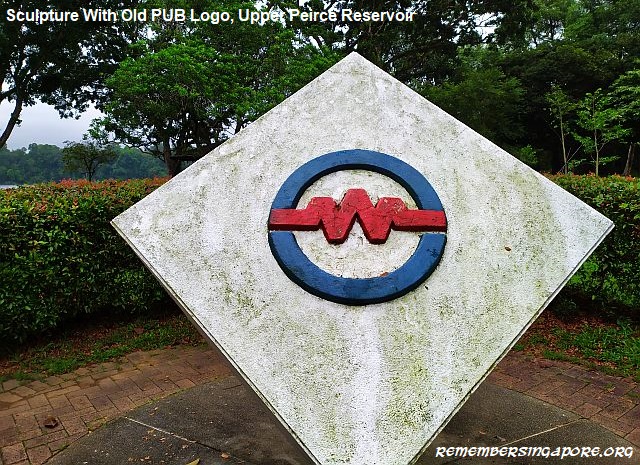
Designed by local graphic designer Eulindra Lim, the new PUB logo had symbolising elements of the three utilities in electricity (centre jagged line in red), water (bottom arc in dark blue) and gas (top arc in light blue), while retaining the circle shape that signified the 24-hour service. The new logo, modern and reflective of a progressive organisation, went on to be arguably one of the most recognisable logos in Singapore.

In 1988, PUB introduced an animated version of their logo, called Flash. With a mission to teach students the safe way of using electricity, Flash came in educational kits given free to all schools. The kits were  made up of animated videos, colour booklets and leaflets with information on the types of approved accessories and tips on choosing electrical appliances.
PUB was reconstituted in 2001 to become Singapore’s national water authority; the regulation of electricity and gas industries were transferred to a new statutory board called the Energy Market Authority (EMA). The PUB logo was refreshed again in 2016 with three swirls in different blue shades, as a mimic to a water cycle. The three swirls represent PUB’s functions in water services, sewerage and drainage, whereas the three blue shades symbolise the water sources in seawater, reclaimed water and catchment water. PUB is also rebranded as “PUB, Singapore’s National Water Agency”.

Post Office Savings Bank (POSB)

The Post Office Savings Bank (POSB) was founded by the British colonial government in 1877. Almost a century later, in 1972, the bank became a statutory board under the Singapore government to provide more efficient services to its customers.

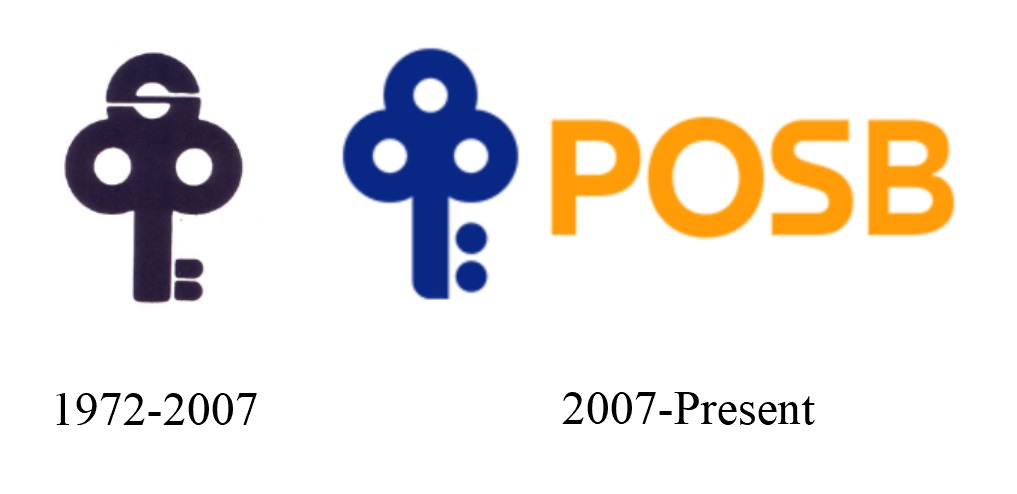
The POSB logo was first unveiled in April 1972 at the opening of the bank’s Toa Payoh branch. Designed by William Lee of Centre Design, the key-like logo, cleverly made up of the bank’s P.O.S.B initials, symbolises security and prosperity. The logo also resembles a tree which represent life and growth. These attributes were incorporated by POSB while at the same time identifying with the green city of Singapore.

POSB changed its name to POSBank in 1990. Eight years later, in July 1998, it was acquired by the Development Bank of Singapore (DBS) for $1.6 billion, ending its role as a statutory board. The POSB logo was given a refresh in 2007, after 35 years. The new design is a simplified form of the old logo, with the name POSB added to it.

Singapore Bus Services (SBS)

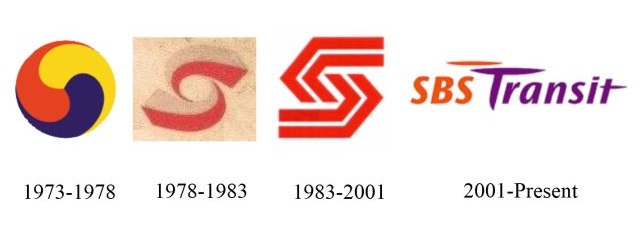
The Singapore Bus Services (SBS) was formed in 1973 through the merger of Amalgamated Bus Company (ABC) Ltd, Associated Bus Services Pte (ABS) Ltd and United Bus Company (UBC) Ltd. The three bus companies, operating in different parts of Singapore, were easily identifiable through their fleets of blue, red and yellow buses.

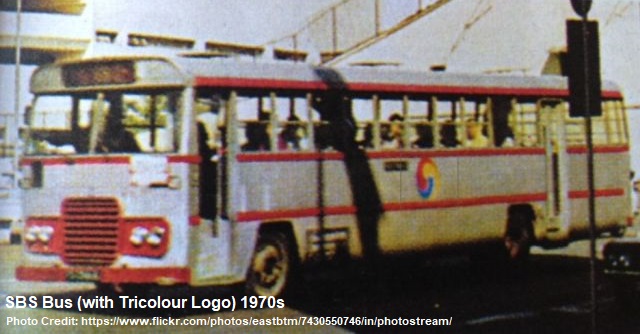
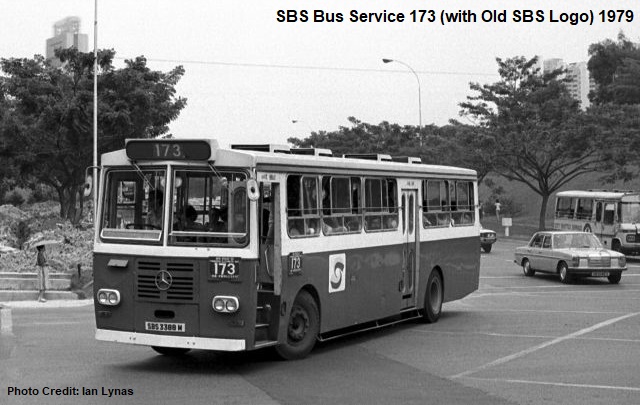
After the merger, SBS designed a circular tricolour logo in the shades of blue, red and yellow, symbolising the amalgamation of the three bus companies. Most of the early SBS buses, however, did not carry the logo.

In 1978, SBS introduced its second logo, also designed by William Lee. As buses were moving objects, any logo designs used should be easily recognisable and remained pleasant in the mind, explained William Lee.

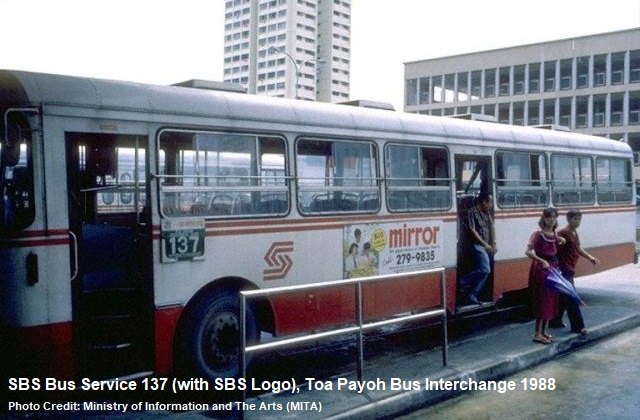
Hence, in his logo design, the arrows were in flowing movement and the circle in the middle of the arrows suggested SBS’ efficient management of the transport system and centralised planning. The red and pink lines of the same contours extending left and right allowed the new SBS logo to be painted on both sides of the buses.

SBS welcomed its third logo in 1983. In the new logo, the arrows in opposite directions signified the operation of its comprehensive network of services. The bold red colour depicted the growing strength and dynamism of the bus company, whereas the white spaces represented its harmonious relationship with the passengers. This SBS logo, arguably its most iconic version, lasted until 2001 when SBS became SBS Transit Limited in a rebranding exercise.

Jurong Town Corporation (JTC)

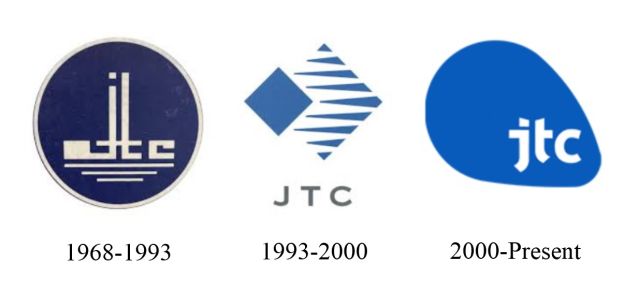
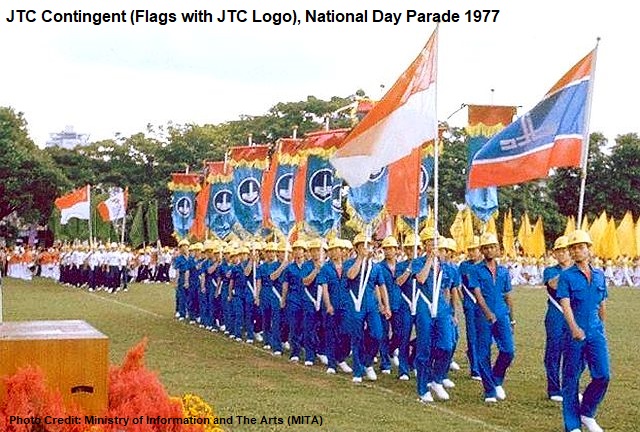
Established in June 1968, the first Jurong Town Corporation’s (JTC) logo was made up of JTC’s initials and resembled a factory with a chimney that emits a puff of smoke. There were three horizontal lines at the bottom, representing Kallang River, Jurong River and Kranji River, the three rivers in Singapore where JTC industrial estates were built.

Entering the eighties, however, factories with chimneys were often associated with sunset industries like steel-making. This made JTC’s logo look outdated. In 1988, JTC invited design, public relations and advertising agencies to create a new logo and corporate identity to better and more accurately reflect the statutory board’s role as an industrial authority.

In 1993, JTC introduced its new logo, which had a tilted solid square that symbolised its firm focus in the development and management of industrial facilities and infrastructure. The horizontal lines beside the tilted square represented JTC’s aim to venture into new realms both locally and internationally.

JTC unveiled its third logo in 2000 when it was corporatised and renamed from Jurong Town Corporation to JTC Corporation. The new JTC logo features a fluid shape that symbolises the organisation’s adaptability in a new economy.

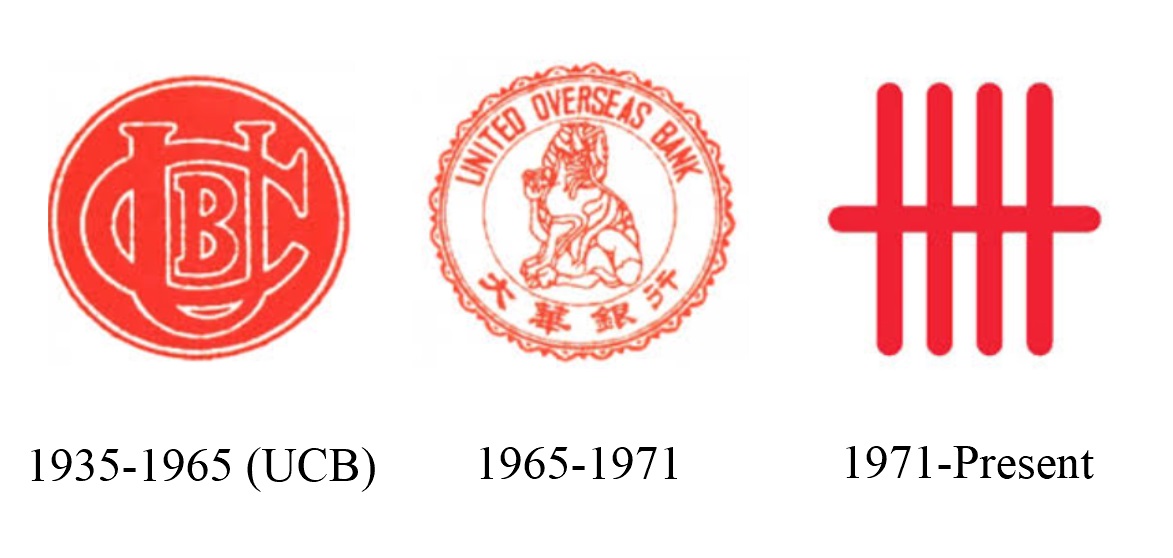
United Overseas Bank (UOB)

The United Overseas Bank (UOB) was first known as United Chinese Bank (UCB), founded in 1935 by a group of local businessmen to serve the merchant community in Singapore.

It was renamed UOB in 1965 to avoid confusion with another bank in Hong Kong that had the same United Chinese Bank name. To commemorate the change in name, UOB introduced a new logo bearing the new name, in both English and Chinese, and a Chinese lion at the centre.

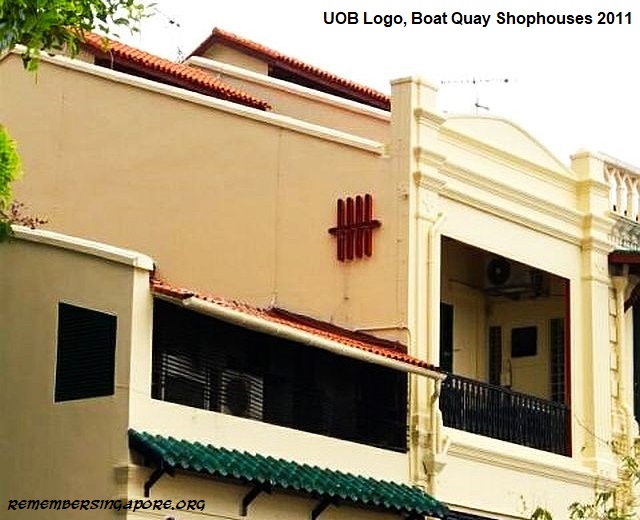
UOB’s simple yet iconic logo was created in 1971 and remains in use today. The five-bar gate symbol of the logo was derived from the traditional Chinese way of counting in fives, representing security and unity. The simplicity of the logo also reflects the bank’s focus and clarity.

Popular Bookstore

Having its early roots under the trade name of Cheng Hing Company in the 1920s, Popular Book Company was officially established as a Chinese books seller in 1934. It was, however, more than half a century later before Popular launched its recognisable logo.

In 1989, Lai Chee Kien, a lecturer from the National University of Singapore’s (NUS) Department of Architecture, won the logo design competition for Popular Bookstore.

The logo comprises the simplified Chinese character of “crowd”, made up of three “person” and resembles three opened books stacked atop one another. This also symbolises that it is a place where people and books come together.

Refer to Singapore Graphic Archives for more Singapore’s graphic design collections.

Published: 31 July 2025

Posted in Nostalgic | Tagged , , , , , , , , , , | 4 Comments

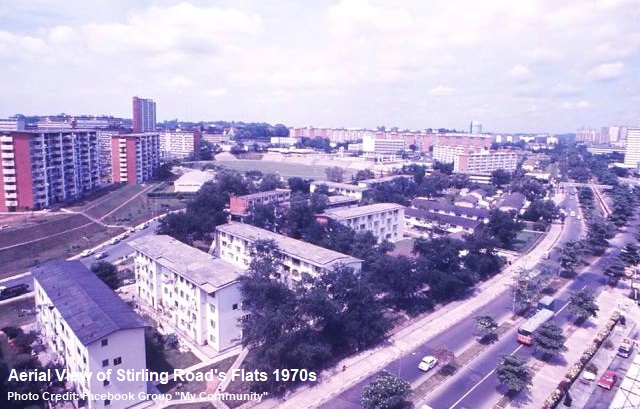
Stirling Road and Singapore’s Oldest HDB Flats

For the longtime residents at Stirling Road, more than six decades have passed in a blink of eye.

Prior to the fifties, this area was made up of swampland, plantations and burial ground. Then came development when the Singapore Improvement Trust (SIT) embarked on the construction of Queenstown estate, filling up the swamps and clearing the plantations. The former Cheang Hong Lim cemetery, bounded by Stirling Road, Anggora Close and Queensway, was acquired by the government in 1965 and cleared for more public housing.

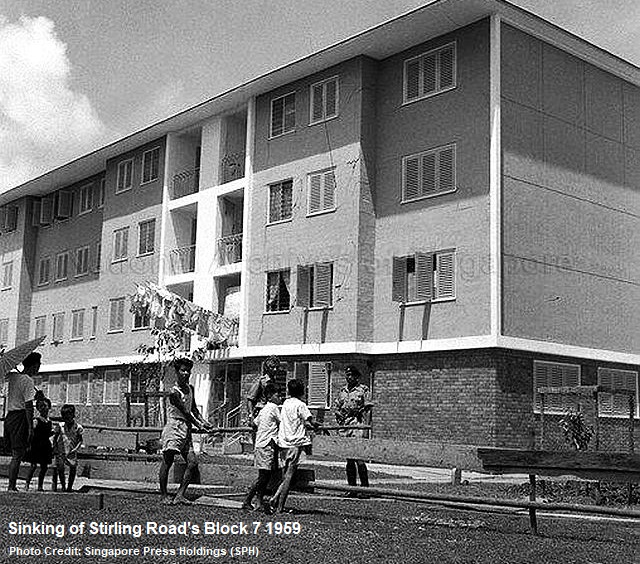
The early SIT flats built in the fifties at Stirling Road, Margaret Drive and Redhill were of low quality. Cracks soon appeared on the walls and the main and bedroom doors were so flimsy that they could easily be forced open by burglars. This led to many complaints by the residents. A bigger issue, however, occurred in 1959 when Block 7 of Stirling Road tilted and slowly sank into the ground. At least two families were trapped by the jammed doors.

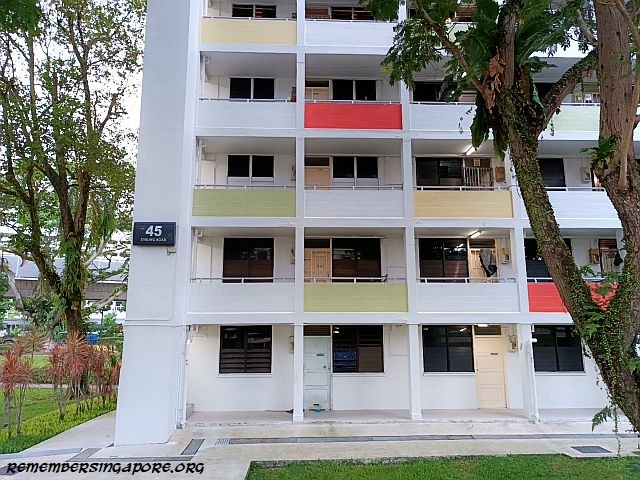
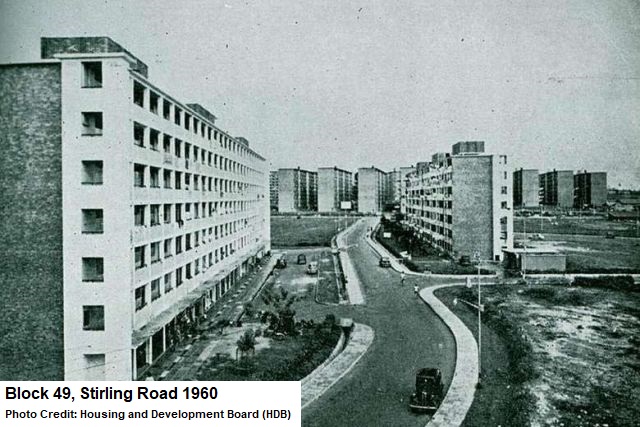
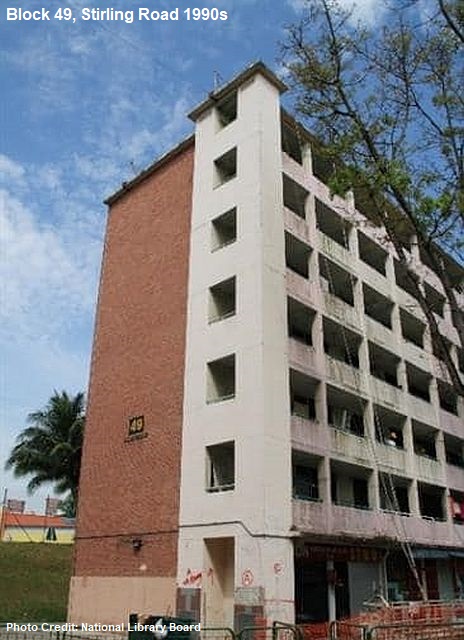
Stirling Road’s three blocks of 45, 48 and 49 were built by the SIT in the late fifties. They were unfinished when SIT was dissolved and replaced by the Housing and Development Board (HDB) on 1 February 1960.

As the successor to SIT, HDB took over and completed the three blocks in October 1960. The three blocks of flats became known as Singapore’s first HDB flats, although the title should instead belong to the Merpati Road flats, which were the first flats fully planned and built by the HDB.

Block 45, 48 and 49 consist of one-room, two-room and three-room units. They were meant to serve as accommodation to the rehoused squatters and residents affected by the notorious Bukit Ho Swee fire. Over the years, the blocks became popularly known as qek lau, or “seven storeys” in Hokkien, among the local Chinese and taxi drivers.

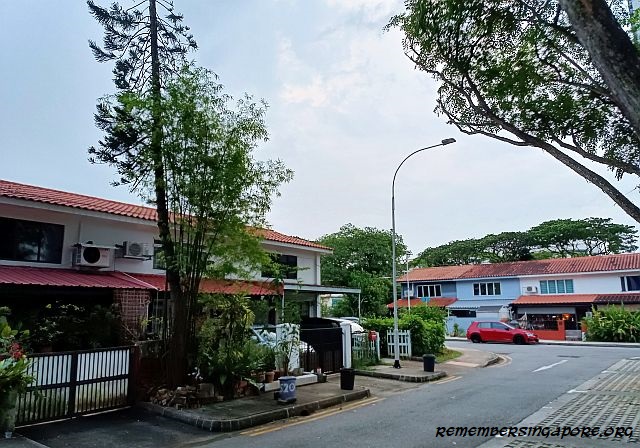
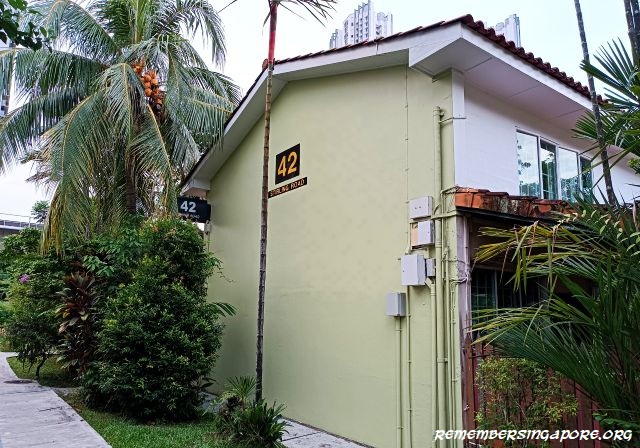
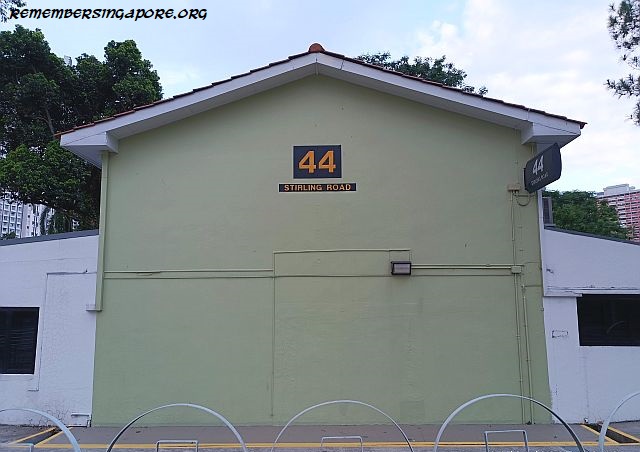
Besides Singapore’s oldest HDB blocks, Stiring Road is also home to many public landed houses, a rare type of residential properties as there are only 285 such houses in Singapore, most of them located at Queenstown. Others could be found at Whampoa and Jalan Bahagia.

These double-storey houses of two- and three-room units were built by the SIT in the late fifties to complement the higher blocks of flats in the vicinity. Today, they are known as the HDB terrace houses.

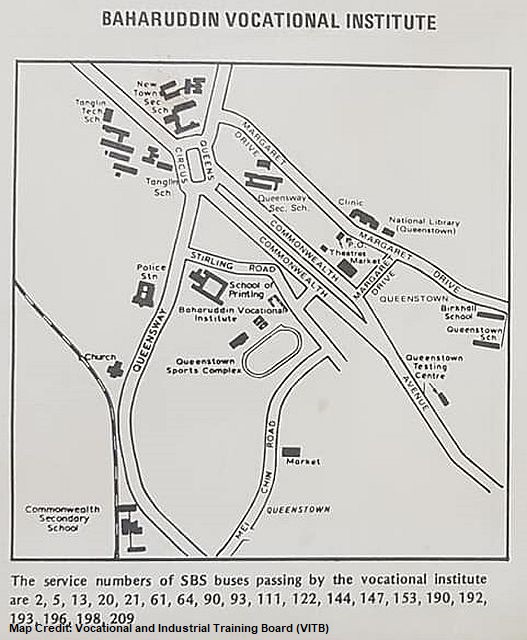
In 1970, the Stirling Road neighbourhood welcomed the addition of a new Queenstown Sports Complex that was well equipped with a stadium, running track and five swimming pools. It was Singapore’s first neighbourhood sports complex, built at a cost of $1.6 million.

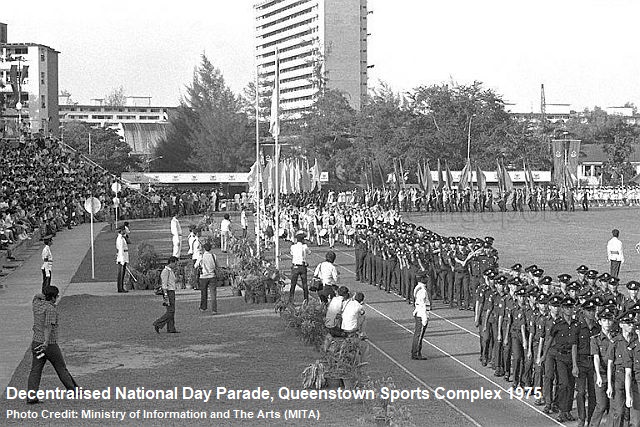
Other than sports events, the sports complex also hosted many Singapore Armed Forces (SAF) parades and the decentralised National Day Parades (NDP) in the seventies and eighties.

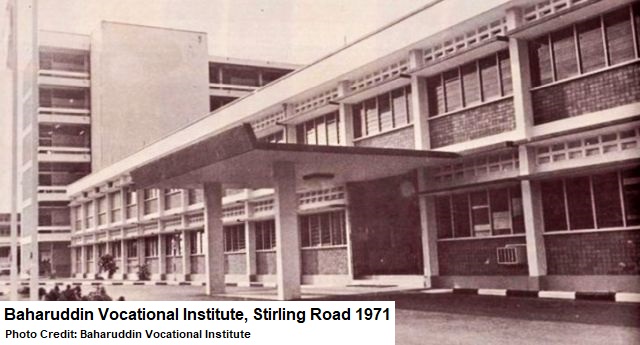
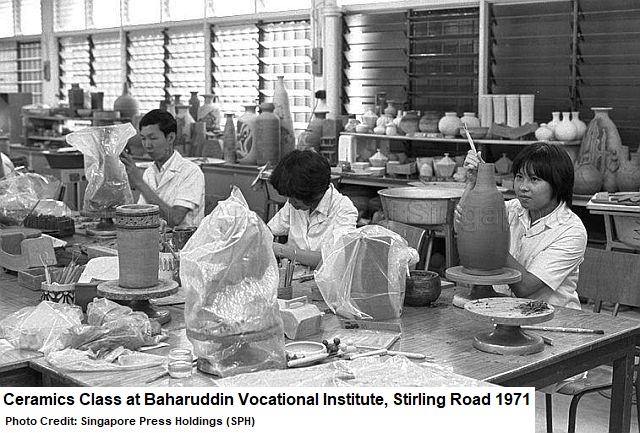
Located beside the sports complex was the former Baharuddin Vocational Institute (BVI). It was opened in 1965 and relocated to Stirling Road in 1969. Named after Baharuddin bin Mohammed Ariff (1933-1961), People’s Action Party (PAP) Assemblyman for Anson, the institute nurtured numerous batches of local designers and craftsmen in advertising, fashion and printing industries.

Baharuddin Vocational Institute was closed in 1990 after its applied arts department and classes underwent restructuring to become the School of Design at Temasek Polytechnic. The old premises was vacated until 2004, when it was taken over by the Management Development Institute of Singapore (MDIS) till this day.

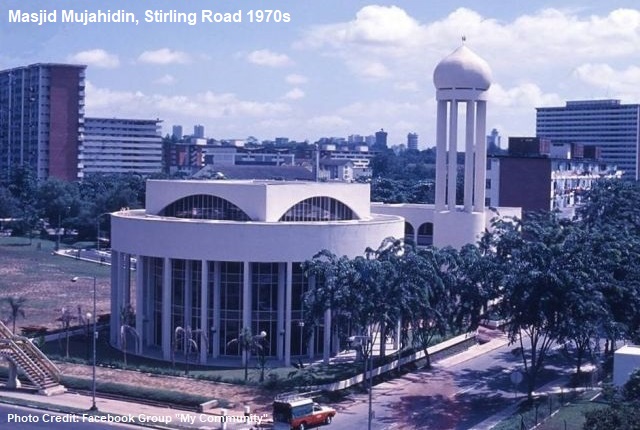
Masjid Mujahidin was officially opened at Stirling Road on 9 October 1977 as the second mosque completed by HDB under the Mosque Building Fund Scheme.

Built at a cost of $1.1 million, the mosque was opened by Dr Ahmad Mattar (born 1940), then-acting Minister for Social Affairs. A rear wing was added to the mosque in 1994, and the building underwent upgrading in 2013.

HDB carried out a lift revamp project in 1979 for some 280 blocks of flats with single lifts, including those at Stirling Road. Cost about $155,000 per lift, the objective of the project was to improve lift services in older estates and allow better accessibility for the residents in the event of a lift breakdown at their blocks.

Another HDB project was the $10-million rubbish chute replacement in 1985 for old flats at Stirling Road, Kallang, Balestier and Henderson. The old-generation rubbish chutes, built before 1963, were mostly made of asbestos, bricks and hollow blocks, and tended to leak easily. HDB reported about 120 cases of damaged chutes for every 1,000 flats. The new chutes, made of reinforced concrete, would bring the figures down to only 1 to 2 cases per 1,000 flats.

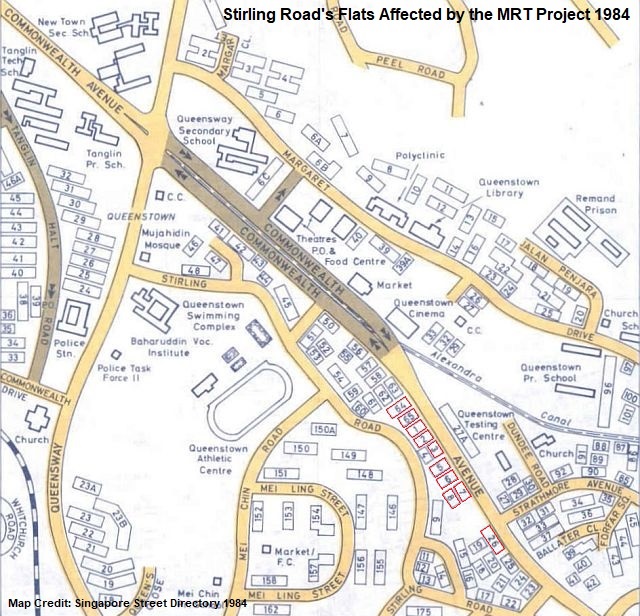
In 1984, Block 1, 2, 3, 5, 64 and 65 of Stirling Road, together with Commonwealth Avenue’s Block 6, 7 ,8 and 26, had to give way for the construction of the Queenstown MRT Station and widening of Commonwealth Avenue.

The low-rise rental flats, built by SIT in the fifties, housed almost 800 residents at the time of their demolition. The remaining flats along this stretch, between Stirling Road and Commonwealth Avenue, were torn down by the early nineties.

The increased development around Stirling Road led to more frequent and severe flooding. This prompted the government to spend $17 million between 1986 and 1990 to reconstruct the drainage system in the vicinity.

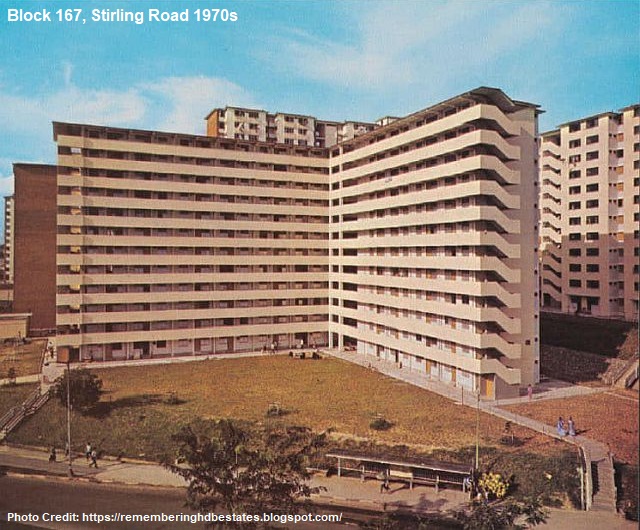
In 1994, Stirling Road’s Block 165 to 171, built in 1970, were selected for the Main Upgrading Programme. Their residents were invited to vote for the upgrading of the flats and public amenities that included a new jogging track, children’s playground, covered linkways and faster lifts. A rousing 83% voted yes.

In 1996, Block 6A and 6B of Margaret Drive and Block 39 Forfar House were selected under the Selective En-Bloc Redevelopment Scheme (SERS), where their residents were given the option to relocate to Stirling Road’s new flats at Block 181, 182, 183 and 184. Under SERS, old flats unsuitable for upgrading but with high redevelopment potential would be acquired by HDB and demolished to make way for new buildings.

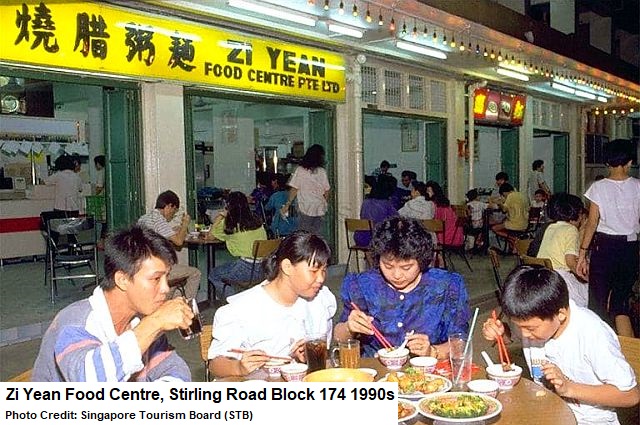
In 2001, it was Stirling Road’s Block 172, 173, 174 and 175’s turn for SERS. The four blocks of flats were subsequently demolished by 2008. The popular kopitiam Zi Yean was previously located at Block 174 Stirling Road.

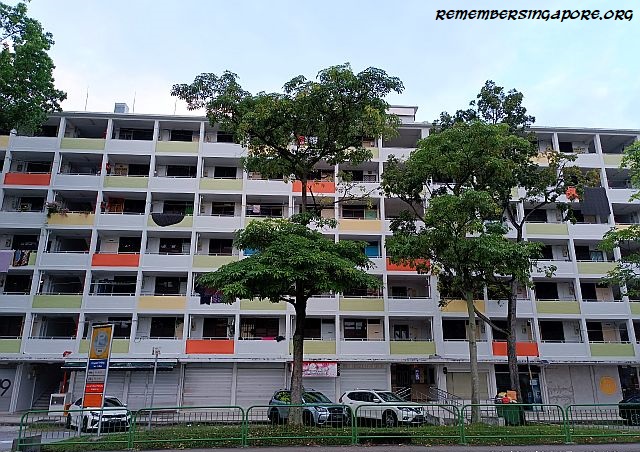
Today, Stirling Road remains a quiet neighbourhood, but with an interesting mix of old and new housing. While it has Singapore’s oldest HDB flats and the rare HDB terrace houses, there are also newer HDB flats, built after the millennium, and private condominiums such as Queens and Stirling Residences.
Published: 30 June 2025

Posted in Nostalgic | Tagged , , , , , , , , , , , , , | Leave a comment

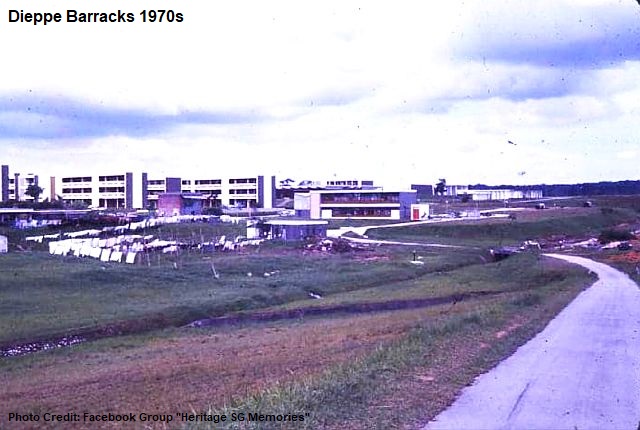
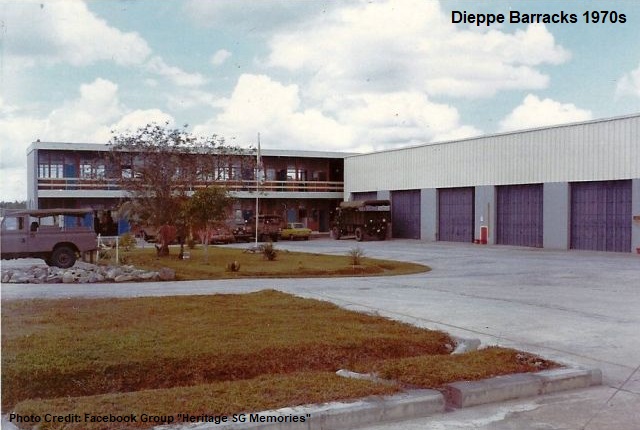
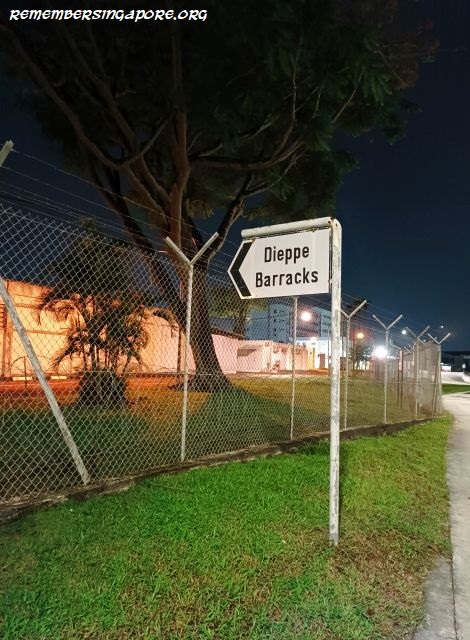
The Camps Along Sembawang Road (Part 2) – Dieppe Barracks

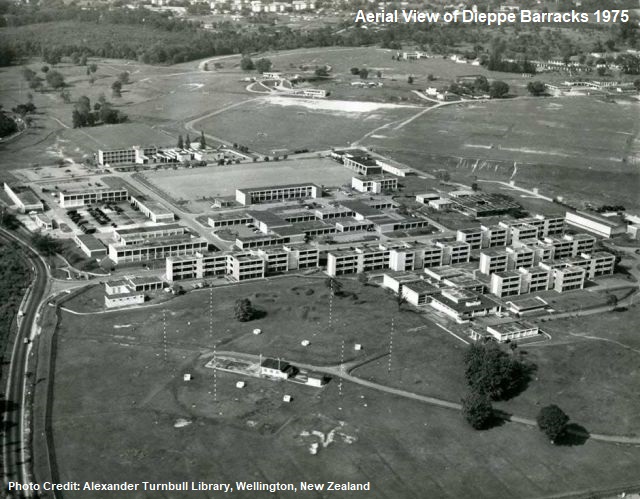
Built in the mid-sixties, Dieppe Barracks’ early occupants included the 3rd Commando Brigade of the Royal Marines and 95th Commando Light Regiment of the Royal Artillery.

It was at Dieppe Barracks where the Royal Marines first flew their regimental colours in a parade held in August 1967. However, due to a weakened economy and devalued pound, Britain made the unexpected announcement in 1968 to withdraw all its military troops that were “east of Suez” by 1971.

ANZUK (Australia, New Zealand and the United Kingdom), the new five-nation defence arrangement with Singapore and Malaysia, was established in 1971 to replace the defunct Anglo-Malayan Defence Agreement. The new command would be supported by Sembawang Garrison that comprised Nee Soon Barracks, Dieppe Barracks and Kangaw Barracks (present-day Sembawang Air Base).

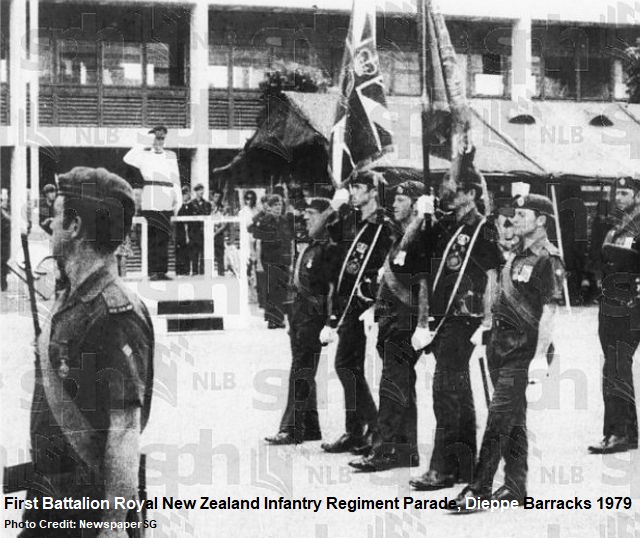
Kangaw Barracks became the home for the HQ 28th ANZUK Brigade and 6th Battalion Royal Australian Regiment, whereas Nee Soon Barracks accommodated the First Royal Highland Fusiliers. At Dieppe Barracks, the First Battalion Royal New Zealand Infantry Regiment (RNZIR) took over the camp from the departing Royal Marines.
New Zealand soldiers were first sent to Singapore and Malaya in 1955, when the region was in a state of instability and high tensions; the Malayan Emergency was at its height, the Korean War had just ended, Thailand was facing an increasing communist threat, and in northern Vietnam, the French lost their colonial rule in the Battle of Dien Bien Phu to the Viet Minh.

New Zealand based some of its fighter aircraft and warships at Singapore, and sent a squadron of the New Zealand Special Air Service to help Malaya fight against the communists. In 1957, the first New Zealand regular infantry battalion was deployed to serve in Southeast Asia.
The New Zealand troops later played a role in helping Singapore during the Konfrontasi period (1963-1966), earning them the “Big Gurkhas” nickname and reputation.

Other New Zealand military presence in Singapore included the Royal New Zealand Air Force at Tengah Air Base and Royal New Zealand Navy’s HMNZS Otago and Waikato at Sembawang Naval Base.

In 1974, with the Australian government’s decision to withdraw its troops from ANZUK Command, New Zealand stepped in with the establishment of an independent 1,250-strong overseas military force in Singapore.

Established in January 1974, the New Zealand Force Southeast Asia (NZFORSEA) comprised the First Battalion Royal New Zealand Infantry Regiment at Dieppe Barracks, Royal New Zealand Air Force 41 Squadron at Tengah Air Base and a Royal New Zealand Navy frigate.

The Australian troops left Singapore in December 1975. Shortly after that, Britain, due to their economic turmoil, also withdrew its ANZUK support, with the last British soldier departing in March 1976.

New Zealand, too, was considering their withdrawal from Singapore. They reiterated their intention for their soldiers to return home in 1975 and 1978. The New Zealand troops, however, continued their deployment in Singapore into the eighties, due to the resurgence of Cold War tensions.

In 1982, the First Battalion Royal New Zealand Infantry Regiment commemorated their 25th year of service in Southeast Asia with a parade at Dieppe Barracks, where the soldiers put up war-paint and dressed themselves in traditional Māori costumes.

The First Battalion Royal New Zealand Infantry Regiment, in 1983, also marked their first anniversary of alliance with the Singapore Armed Force’s (SAF) 1st Commando Battalion in a Colours parade at Dieppe Barracks. Both units had established ties since the seventies, collaborating closely with each other in information exchanges, training and regimental traditions.

Dieppe Barracks played a recreational role in hosting many sports competitions, such as football and cricket, in the seventies and eighties. For the New Zealanders, rugby was more than their favourite sports; it was a national identity and culture. The New Zealand troops strengthened ties with their Southeast Asian counterparts by actively playing competitive rugby matches against the local and Malaysian teams. New Zealand played their last rugby game in Singapore in 1988.

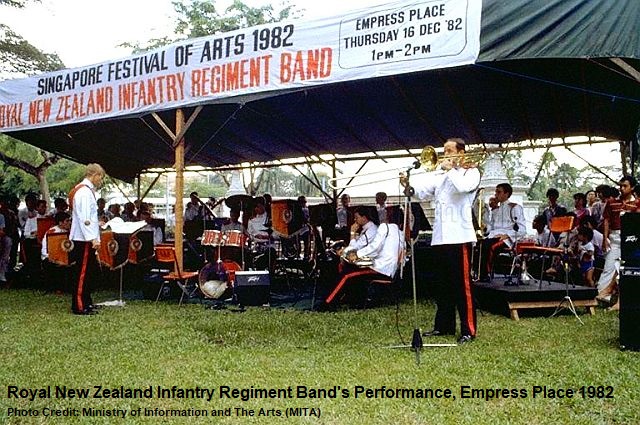
Besides the rugby diplomacy, the regiment band of the New Zealand infantry boosted relationships in its own way by putting up performances and participating in local art festivals in various parts of Singapore.

In 1986, the New Zealand government confirmed its plan to withdraw its military presence in Singapore in order to switch its main strategic interests to the South Pacific.

In June 1989, the New Zealand troops participated in its last major military exercise in Malaysia. Codenamed Taiaha-Tombak XI, in Malaysia, the exercise also involved British, Australian and Gurkha soldiers.

A final ceremonial parade with helicopter flypast was held at Dieppe Barracks for the New Zealand force in July 1989. The event’s poignant moment came when the lone bugler blew the sombre notes of the Last Post.

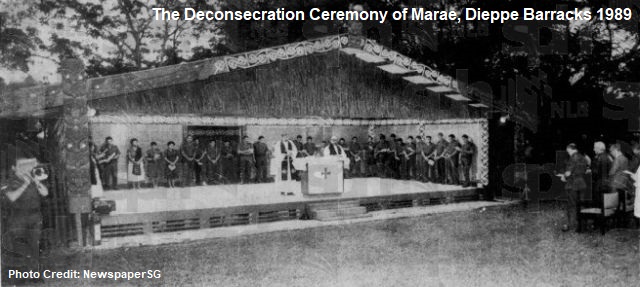
Dieppe Barracks’ marae, a traditional meeting house and centre of Māori cultural life, was deconsecrated in 1989. The ceremony was attended by the New Zealand troops, their families and invited dignitaries as they prayed and sang hymns. The wooden building, with an icon of Māori god of war Tumatauenga at the top of its roof, was subsequently dismantled and sent back to New Zealand.

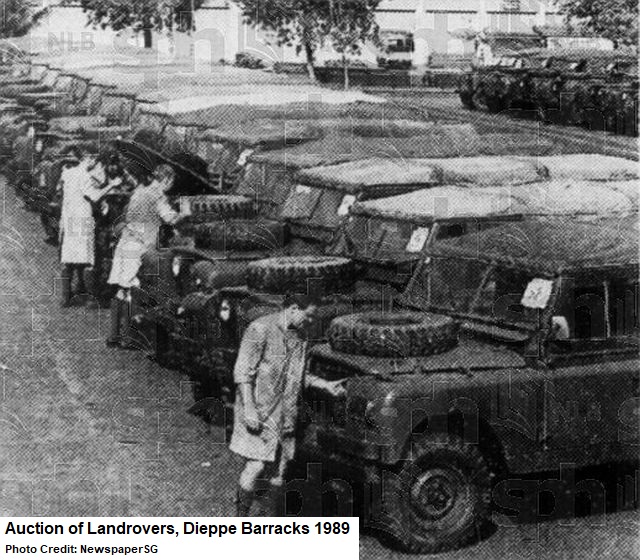
Just before their departure, the New Zealand troops put up an auction at Dieppe Barracks for their trucks, land rovers, buses and spare parts to be sold to the local and overseas buyers. Some of the vehicles were more than 25 years old, but remained functionable and suited for rough terrains at Indonesia, Philippines and Papua New Guinea’s plantations and remote areas.

The New Zealand troops eventually bid goodbye to Singapore and Dieppe Barracks in August 1989, ending their 34 years of military legacy in Southeast Asia. The three decades saw the New Zealanders involved in three campaigns – the Malayan Emergency, Konfrontasi and South Vietnam. 34 of their officers and men were killed in action, and a further 33 died of illness or accidents.

The vacated Dieppe Barracks was handed over to the SAF for a $1 token, after which the camp became the new home for the 1st Battalion, Singapore Guards. Today, it houses the HQ Singapore Guards and HQ 13th Singapore Infantry Brigade.

Published: 30 May 2025

Posted in Historic | Tagged , , , , , , , , , , , , , , , | 2 Comments

The Beginning and End of Lim Chu Kang “Runway”

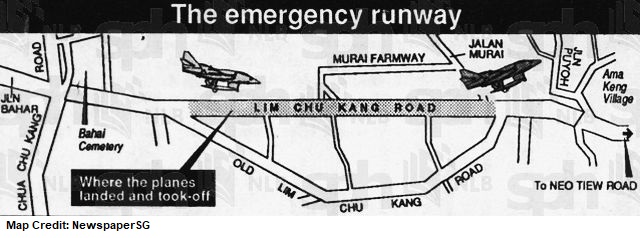
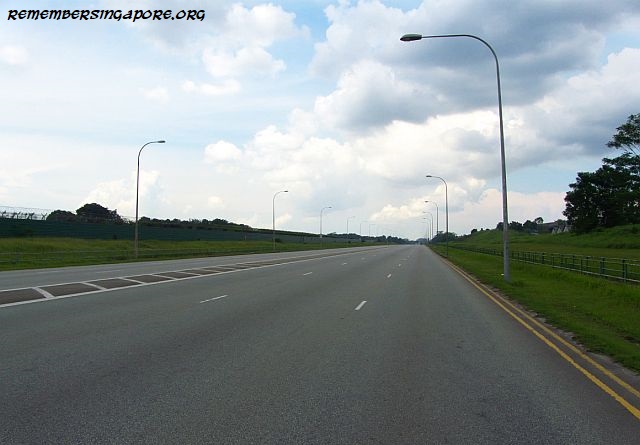
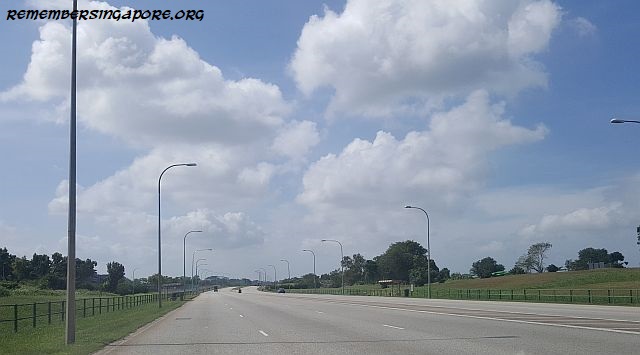
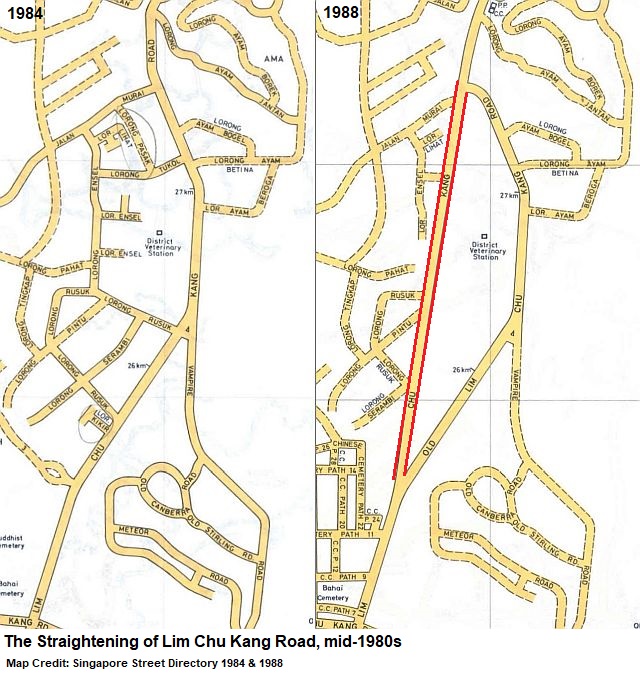
Lim Chu Kang Road used to be a long curvy road. In the mid-eighties, a new straightened stretch of Lim Chu Kang Road was built, and, over the years, became known as the Lim Chu Kang “Runway”. The former curved segment of the road was renamed Old Lim Chu Kang Road.

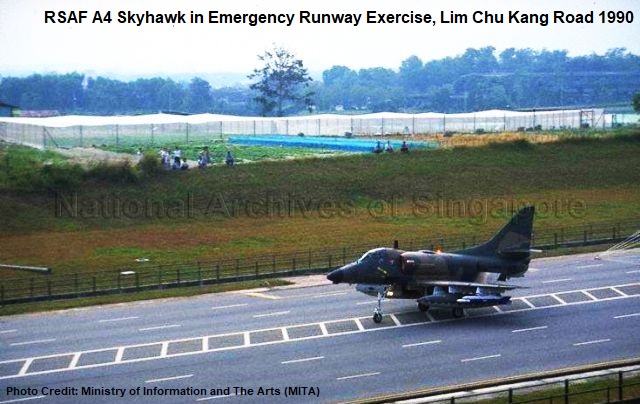
The new six-lane Lim Chu Kang Road, after its completion, was not immediately opened to public and traffic. On 16 April 1986, it was used as an emergency runway for the Republic of Singapore Air Force (RSAF) aircraft. This was the first emergency runway exercise for RSAF, involving two A4 Skyhawks and two F5E Tigers.

Two weeks prior to the exercise, Phua Bah Lee (1932-2021), Senior Parliamentary Secretary of the Ministry of Defence, met the Lim Chu Kang community leaders and explained to them the importance of such exercises, and how the RSAF could enhance its operational readiness and test its capabilities to launch and recover their aircraft from roads and expressways.

The Lim Chu Kang runway was narrower (24m wide) and slightly shorter (2.5km long) as compared to an actual runway, which is about 2.75km long. The conversion of the road into an emergency runway could take between six and 48 hours, depending on the tension level of the situation. The preparation works included the dismantling of lampposts, bus stops, drain railings and traffic lights. Sweeping and removal of road debris and objects was also carried out to minimise potential damages to the aircraft.

The use of Lim Chu Kang Road as an emergency runway was one of the Singapore Armed Forces’ (SAF) ways to maximise the use of training areas, other than its then-traditional sites at Pulau Tekong, Palau Brani, army camps, air bases and naval bases.

In the late eighties and early nineties, several SAF trainings and exercises were trialled at non-traditional sites. Other than Lim Chu Kang Road, there was also urban warfare training held at disused Housing and Development Board (HDB) flats at Boon Lay and Mei Ling Street. Pulau Sudong in 1990 became a new training site for SAF ground troops.

The Lim Chu Kang runway exercise was carried out again in March 1990. This time, the RSAF improved their communication efforts by disseminating pamphlets and giving publicised briefs to the community leaders, residents, farmers and students in the area.

The mainstream media also broadcast news on Lim Chu Kang Road’s closing and reopening dates. During the road closure, bus services were diverted and residents were advised to take alternate routes. For example, residents had to use Neo Tiew Road to return to their Ama Keng and Thong Hoe villages.

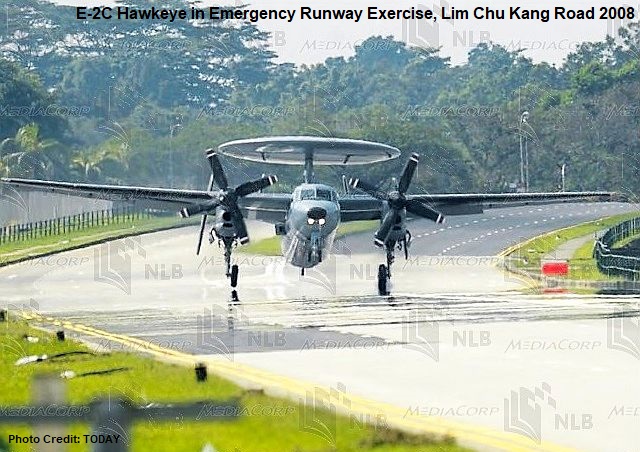
As many as 10 RSAF aircraft took part in the 1990 emergency runway exercise, with F16 Fighting Falcon making its first public appearance. Subsequent emergency runway exercises were conducted in November 1992, December 1997, November 2002 and November 2008. The last – Exercise Torrent – was held in November 2016.

In 2017, the Singapore Government announced that Tengah Air Base would be expanded as part of Paya Lebar Air Base’s relocation plans from 2030 onwards. A new runway will be developed for the expanded Tengah Air Base to meet RSAF’s operational needs. The nearby farms, roads and cemeteries, with as many as 80,500 graves, are expected to make way for Tengah Air Base’s expansion.

Another new Lim Chu Kang Road will be built in the second half of 2025 to replace Lim Chu Kang “Runway” and Old Lim Chu Kang Road; both roads are likely to be expunged or become part of the expanded Tengah Air Base.

After hosting seven emergency runway exercises in the span of 39 years, Lim Chu Kang “Runway” has its mission accomplished and will soon be a part of the area’s history.

Published: 28 April 2025

Posted in Exotic | Tagged , , , , , , , , , , , , | 2 Comments

Landmarks of Yesteryears – Whampoa Ice House

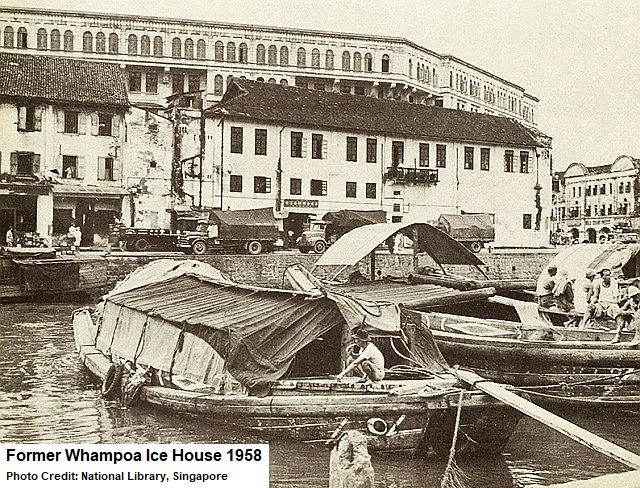
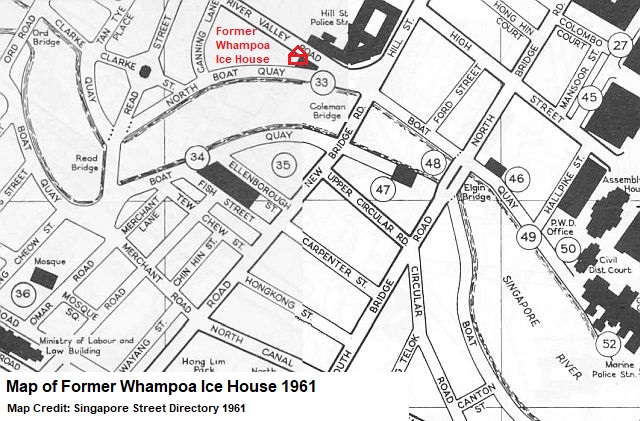
The old godown with Victorian wrought-iron balustrades was a landmark along the Singapore River for more than a century. It was the Whampoa Ice House, Singapore’s first ice house that opened in 1854. Hoo Ah Kay (1816-1880), better known as Whampoa, built the ice house on the parcel of land near the Coleman Bridge.

This site, at the junction of River Valley Road and Boat Quay, was given by the colonial government to Hoo Ah Kay in exchange for his 60 acres of nutmeg plantation at Tanglin, now a part of the Botanic Gardens.

Global Ice Trade

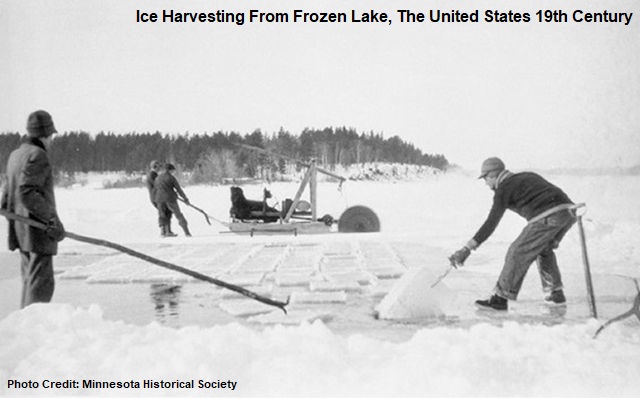
It was almost unimaginable today that Singapore once imported ice from the United States. In 1806, American businessman Frederick Tudor (1783-1864) acquired his first ice ship and loaded it with 130 tons of ice harvested from frozen lakes and rivers. The ice ship headed to Martinique in the eastern Caribbean Sea, but Tudor’s first venture ended in failure due to the locals’ low demand of ice. He was also ridiculed, as the people back then did not believe the ice could last throughout the many months of voyages at sea.

Frederick Tudor eventually succeeded by covering the blocks of ice with thick white pine sawdust that greatly reduced the rate of melting. Between the 1810s and 1830s, his ice was supplied and shipped to Cuba, India and Singapore. Tudor became known as the Ice King as he established a monopoly in the global ice trade.

The world demand for ice grew from 130 tons in 1806 to 146,000 tons in 1856. The demand only slowed down after the invention of the ice-making machine.

Whampoa Ice House

As a boy, Hoo Ah Kay arrived at Singapore from China with his father in the early 19th century. His father started a provision shop at Boat Quay selling beef, bread and vegetables. Hoo Ah Kay took over the business after his father’s death, and expanded it by winning contracts to supply provisions to the East India Company’s ships.

In the 1840s, Hoo Ah Kay entered a joint venture with Gilbert Angus (Angus Street was named after him), where they opened their firm Whampoa and Company at Telok Ayer Street. In 1854, Whampoa and Company established the Whampoa Ice House, stocking it with ice imported from The United States and selling them to the community.

The ice trade, however, did not work well for Hoo Ah Kay and Gilbert Angus, as they had overestimated the local ice consumption. Their investments were based on the forecast of an estimated 1,000 lbs (or about 454 kg) consumption of ice per day, but in the first two years of business, the company only managed to clock daily sales of 400 to 500 lbs (or about 181 to 227 kg) of ice.

After three years of losses, Hoo Ah Kay ended the joint venture in 1857. Whampoa Ice House was taken over by Tudor Ice, Frederick Tudor’s company, in 1861. Tudor Ice did not fare better either; it also incurred steep losses due to the low local demand and consumption of ice.

Local Ice Factories

The Singapore Ice Works opened at River Valley Road in 1861. While Tudor Ice failed, Singapore Ice Works succeeded by procuring an ice-making machine to locally make the ice for sale. This reduced the cost of ice to almost 40% cheaper as compared to imported ice. This attracted sufficient demands for the company to consistently make profits.

When Tudor Ice closed in 1865, Whampoa Ice House was sold to the Singapore Ice Works, where it remained as Singapore’s main ice factory until the 1880s.

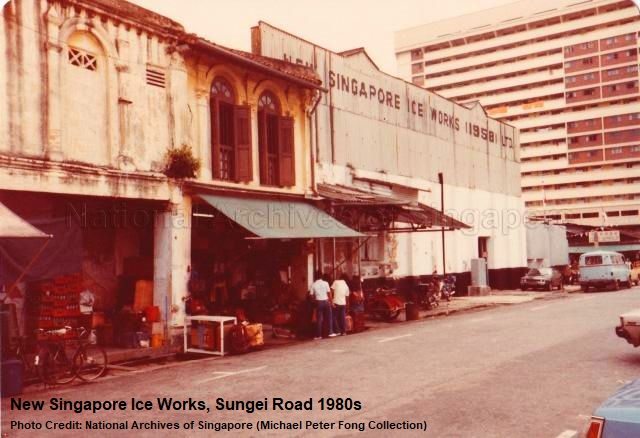
The Straits Ice Company and Singapore Distilled Water Ice Company (later renamed New Singapore Ice Works) opened in 1881 and 1890 respectively, adding competition to the ice making and supply industry. The consumers benefited from the resulting price wars.

Like Whampoa Ice House, the New Singapore Ice Works’ factory at Sungei Road had, over the decades, become a landmark so iconic that the local Chinese called the area “gek sng kio” or frosted bridge in Hokkien.

Ice became a necessity by the late 19th century, and with the establishment of Cold Storage Company in 1903, frozen meat, fruits and milk imported from other countries became readily available. In the late 1910s, Cold Storage also went into ice-making and emerged as one of the main ice manufacturers in Singapore.

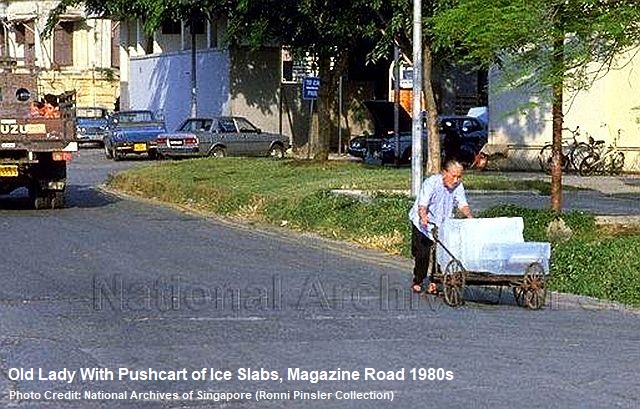
These major ice factories led to the rise of small-time ice sellers, who would buy large blocks of ice and cut them into smaller pieces to sell to consumers and other small businesses. The fifties and sixties were the golden eras for these ice sellers, before their number dwindled by the eighties, when fridges and freezers for homes and shops became common and affordable.

Demolition and Replica

As for the former Whampoa Ice House, it was used as a storage place for Tai Thong Rubber Works Ltd in the early 20th century. Eventually the building was torn down in March 1981 for the widening of River Valley Road.

Whampoa Ice House’s demolition ironically coincided with the Conservation Forum in the early eighties, a forum that was sponsored by the Singapore Institute of Planners and supported by an enthusiastic group of architects and town planners who focused on future developments and the possible plans in saving areas of old Singapore. the forum’s attendees were representatives from the Urban Redevelopment Board (URA), Singapore Tourist Promotion Board (STPB) and Preservation of Monuments Board.

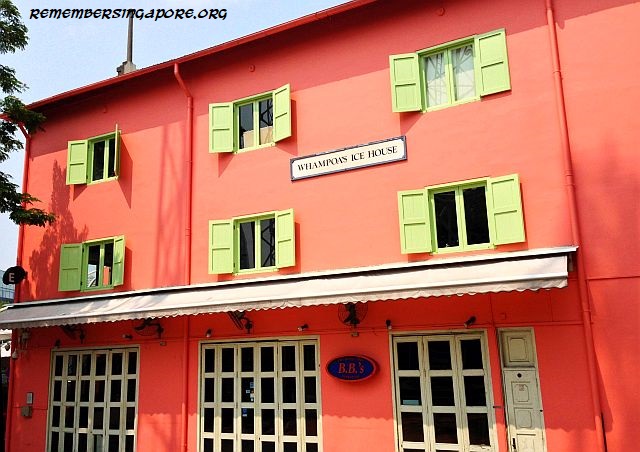
But by then, the century-old Whampoa Ice House, despite its significant architectural and heritage merit, had walked into history. Its former location now stands a replica of the Whampoa Ice House.

Published: 29 March 2025

Posted in General, Historic, Nostalgic | Tagged , , , , , , , , , , , , | 2 Comments